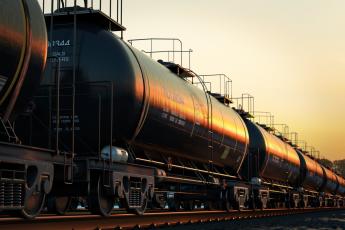
AFPM: Amended merger filing puts renewed pressure on STB to strengthen freight rail competition

To produce the essential fuels and products Americans rely on, refiners and petrochemical manufacturers need a competitive and reliable rail system. Unfortunately, substantial consolidation among the U.S. freight rail industry has led to massive service failures and skyrocketing rates — much of which trickles down to American consumers.
Just as important, rail safety underpins the reliability of the entire freight network. When rail service falters due to preventable incidents, it disrupts production, increases costs and erodes public confidence in one of America’s most critical transportation networks. A safe rail network is vital to keeping our products moving across the country.
Policymakers must adopt sensible rail reforms that enhance competition and foster a strong rail network.
AFPM advocates for a competitive U.S. freight rail system that delivers reliable, affordable and safe transportation of our products.
With the largest ever rail merger potentially on the horizon, the STB must act to protect shippers and ensure freight rail gets more competitive in America — not less.
History has shown us that freight rail consolidation has long-coincided with higher rail shipping rates, longer shipping times and more infrequent service — all of which impact operations at refineries and petrochemical facilities and inflate the costs of everything that moves by rail.
This proposed rail merger would limit the universe of Class 1 freight railroads to just five carriers — down from nearly 30 carriers in 1980. It would also impact the very heart of American refining and petrochemical manufacturing — giving one new mega-railroad control of 51 percent of petrochemical rail traffic and 41 percent of crude and NGLs.
AFPM urges the regulators to be guided by the facts — another rail merger would not enhance competition, it would not be in the public interest, and it would ultimately raise costs for both shippers and consumers.
The U.S. freight rail industry has been consolidated to a point where customers have very little power and leverage to push for better service. Roughly 75% of U.S. refineries and petrochemical facilities are considered ‘captive shippers’ — meaning they are only served by one freight rail carrier and can’t shop around for better prices or service.
Reciprocal switching would address this monopoly — allowing shippers the option to transfer to a second railroad, at a designated interchange, for competitive pricing, improved service quality and/or to avoid circuitous routes. For the railroads, it presents them with a simple decision: provide better service to customers or risk losing their business to a competitor.
AFPM encourages STB to continue pursuing broad access to reciprocal switching for all captive shippers to reintroduce competition in the U.S. freight rail industry.
AFPM members are deeply committed to the safe transportation of fuels and petrochemicals. This is a shared responsibility across the freight rail system. While shippers control the loading, classification and labeling of their rail cars, rail carriers are responsible for operating trains safely, maintaining tracks, inspecting equipment and managing rail routes. When infrastructure is properly maintained, operational rules are followed and trains remain on the tracks, materials are transported safely and securely.
Our members invested billions of dollars to lease, own and maintain the tens of thousands of rail tank cars they rely on every day. In recent years, they have made considerable investments to upgrade their fleets to meet the newest and most robust federal standards.
Most regulatory efforts to date have focused on tank car specifications and the characteristics of materials transported. AFPM believes that any effort to improve rail safety must start by addressing the root cause of the accidents — derailments. Track integrity, human error and equipment defects are the primary root causes of train derailments, not the tank cars themselves.