Much of the focus within the Renewable Fuel Standard is on corn ethanol and the 15-billion-gallon conventional biofuel mandate. But less critically examined in this policy administered by the Environmental Protection Agency is the mandate for advanced biofuels, including biodiesel.
Since the Renewable Fuel Standard (RFS) was enacted, the Environmental Protection Agency (EPA) has had the difficult responsibility of implementing a broken and unworkable biofuel blending program.
The biofuel lobby has made a number of claims to muddy the waters around the Renewable Fuel Standard (RFS) and halt progress on better aligning vehicle and transportation fuel policies.
There is a fundamental flaw in the system designed to ensure compliance with the Renewable Fuel Standard (RFS): The assumption that refiners would not blend ethanol into their fuel were it not for the policy and its threat of crippling costs being imposed on obligated parties who do not blend.
During a recent visit to Iowa — smack in the middle of corn country — the President announced a policy change that would direct the Environmental Protection Agency (EPA) to waive Clean Air Act rules and permit the year-round sale of E15 (gasoline with 15-percent ethanol).
The corn lobby has falsely claimed recently that waivers granted by the EPA to small refiners—relieving them from the onerous costs of complying with the Renewable Fuel Standard (RFS)—have destroyed demand for ethanol. Nothing could be further from the truth.
Twenty senators delivered a letter to President Trump yesterday firmly stating their opposition to rumored regulatory action to expand the sale of E15 fuel.
Current fuel at the pump contains 10 percent ethanol because Congress passed a law mandating ethanol use. Some are pushing for a higher proportion of 85 percent, known as E85.
It should come as a surprise to congressional supporters of the Energy Independence and Security Act (EISA), that their 2007 votes to expand the Renewable Fuel Standard (RFS) to advance “homegrown energy” would lead to historic U.S. imports of biodiesel
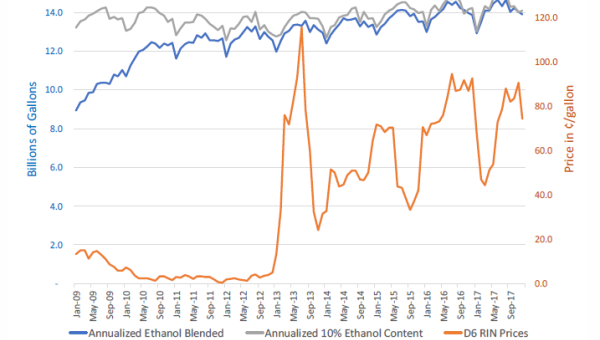
The latest U.S. Energy Information Administration data again shows ethanol blending and consumption in the U.S. remain steady and strong compared to previous years. This disproves claims that U.S. ethanol demand has been decimated by hardship waivers exempting small refineries facing that are facing hardship from their Renewable Fuel Standard blending obligations.