As Hurricane Florence approaches the East Coast, Carolina communities are preparing for the Category 3 storm to make landfall – while nearly two million residents are under warning to evacuate.
As Hurricane Florence approached the East Coast this week, nearly two million residents throughout the Carolinas, Maryland and Virginia were placed under evacuation watch.
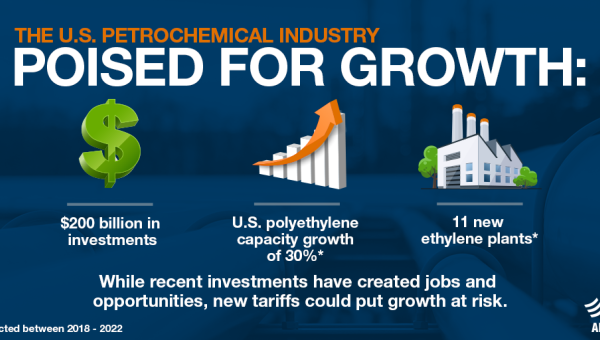
One of America’s major strengths when it comes to the economy and global trade is our petrochemical industry, which produces the building blocks used in manufacturing supply chains across the globe.
As 2017 gets started, the activist rhetoric for divestment will inevitably ramp up. So here are a few hard truths that divestment proponents ignore: 1. It’s bad business. Pension and university...
U.S. petrochemical manufacturers are at the forefront of research and development into cutting-edge solutions to give new life to used plastic products. Leveraging their in-depth understanding of plastics’ molecular composition and the manufacturing process itself, AFPM members are investing in recycling technology, infrastructure and partnerships that will reduce mismanaged plastic waste by applying unlocking its value as a feedstock.
Refineries are not the story when it comes to retail gasoline prices. Raw materials (in this case crude oil) account for the biggest share of the final price consumers pay.
COVID-19 upended energy markets. Demand disappeared and producers scaled back. Now that economies are reopening, and the demand for goods and services is rebounding, the demand for energy all along the supply chain is increasing, driving up not only the cost of the feedstocks and fuels refineries and petrochemical manufacturers use, but also the cost of the energy used at every step of the supply chain.
WASHINGTON, D.C. – Chet Thompson, president and CEO of the American Fuel & Petrochemical Manufacturers (AFPM), today issued the following statement in response to comments by Vice President Joseph R. Biden Jr. in last night’s presidential debate