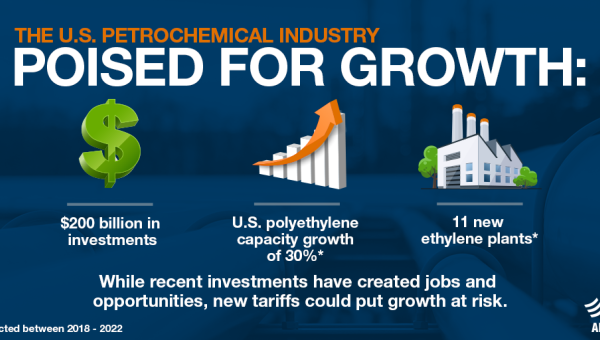
One of America’s major strengths when it comes to the economy and global trade is our petrochemical industry, which produces the building blocks used in manufacturing supply chains across the globe.
Alongside the publication of AFPM’s new study, “The Fuel & Petrochemical Supply Chains: Moving the Fuels & Products That Power Progress,” Flash Point interviewed leaders working on U.S. midstream infrastructure issues.
A 15-year rise in U.S. exports of refined products continued in 2019 with our nation exporting more than ever, underscoring the importance of these products to fueling a growing world.
As 2017 gets started, the activist rhetoric for divestment will inevitably ramp up. So here are a few hard truths that divestment proponents ignore: 1. It’s bad business. Pension and university...
The United States is the now largest producer of crude oil and has the largest, most complex and most efficient refining industry in the world. Yet two of our most important oil trading partners are those that share our borders: Canada and Mexico.
Refineries are not the story when it comes to retail gasoline prices. Raw materials (in this case crude oil) account for the biggest share of the final price consumers pay.
Right now, members of Congress are debating a series of taxes as part of the multi-trillion-dollar reconciliation package that could make the crude oil that runs through U.S. refineries more expensive.
It’s no secret that infrastructure is the backbone of this nation, from roads to bridges to airports and more – America relies on its infrastructure to keep people and our economy moving.