In this session, we will discuss in detail the definition of Normalization of Deviance and how it has contributed to major accidents, including both Space Shuttle disasters. Examples will be provided of Normalization of Deviance in operating and maintaining process plants, as well as in our daily lives.
Participants will:
Gain an understanding of how to stop Normalization of Deviance
Learn how to identify and correct this behavior
Take this concept home to apply with their families
After more than 50 years of root cause analysis (RCA), you might expect problem solving to be a clear and straightforward process. It’s not. You can find yourself caught in unproductive debates. “Is that a contributing factor, or a causal factor?” “That’s a primary cause, but it’s not the main cause.” The result is frustration, inefficiency, and solutions that allow a repeat of the same problems.
A better approach to RCA is one built on evidence-based cause-and-effect relationships. The steps are simple: define the problem, explain why it happened, and identify solutions to reduce risk. Its focus is on having more reliable work processes, learning, and improving, which helps engage the frontline and minimize blame.
This session will explain the pitfalls of drifting from scientific problem solving and features a case study demonstrating how first-principles RCA leads to tangible improvements in reliability and human performance.
Participants will learn:
Four common errors that arise when explaining why an incident occurred
The biggest misconception about RCA
Why effective RCA does not require any proprietary techniques, terminology, or software
How RCA can be scaled for low-risk incidents and expanded as needed for higher-impact events.
How to reduce “human error” by involving those who perform the work
Moderator:
Bill Clark, Phillips 66
Speakers:
Bill Clark, Phillips 66
Mark Galley, ThinkReliability
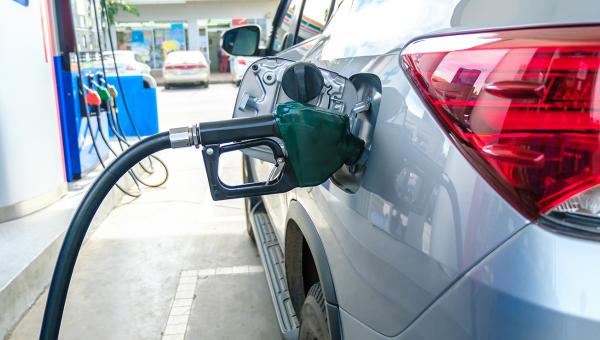
AAA expects roughly 45 million travelers to head out of town and go at least 50 miles from home over the upcoming Memorial Day weekend, breaking a 20-year travel record in the process. The vast majority of these travelers—nearly 90%—are likely to be road warriors, driving cars and trucks fueled by American-made gasoline.
Artificial Intelligence, Advanced Process Controls
Facilitator:
Atique Malik, AIControl LLC
Speaker:
Yangdong Pan, Delek US
Toni Adetayo, Imubit, Inc.
Multi-unit optimization has long been a complex issue in the oil and gas industry. Despite efforts using first-principle models or empirical approaches, challenges persist. However, the emergence of machine learning and AI technologies offers an alternative solution. In particular, AI-based process control technology has shown promise for multi-unit optimization. This session will delve into an example using a distillate system optimizer to understand how these AI models address large-scale optimization challenges and how parent and child models collaborate.
Participants will learn:
The strength of the technology and its high flexibility of handling core issues
How the technology deals with the availability of individual units, and cooperates with unit controllers from other advanced control technologies
How to sustain the technology’s performance and benefits
This session will introduce an integral part of maintenance and reliability engineers’ responsibilities to capital projects. How this relationship and communication is important to get safe, reliable, and maintainable equipment installed when working with a capital project team.
In this session, leaders in plant maintenance from two major companies in the fuel and petrochemical manufacturing industry will discuss the advantages of a company-wide standard process for routine maintenance. Gaining alignment on a common work practice across a large and geographically diverse portfolio can be challenging, but the resulting organizational discipline can yield improved efficiency, reliability and decision-making. The speakers will provide a high-level overview of their routine maintenance processes and share key success factors for implementing a common maintenance work practice at multiple facilities.
Participants will:
Learn the major elements of a routine maintenance process
Hear examples of strategies for a successful wide-scale implementation
Ask questions to understand how a common work practice for plant maintenance can be applied at their company
Moderators:
Mike DeHart, Valero Energy Corporation
Speakers:
John Duenckel, Valero Energy Corporation
Tom Golden, LyondellBasell Industries
Every day, U.S. consumers purchase more than 350 million gallons of gasoline to get to work and school, to go on vacation and to see family. But what goes into the price we pay for gasoline?
Artificial Intelligence, Advanced Process Controls
Facilitator:
Atique Malik, AIControl LLC
Speaker:
Yangdong Pan, Delek US
Toni Adetayo, Imubit, Inc.
Multi-unit optimization has long been a complex issue in the oil and gas industry. Despite efforts using first-principle models or empirical approaches, challenges persist. However, the emergence of machine learning and AI technologies offers an alternative solution. In particular, AI-based process control technology has shown promise for multi-unit optimization. This session will delve into an example using a distillate system optimizer to understand how these AI models address large-scale optimization challenges and how parent and child models collaborate.
Participants will learn:
The strength of the technology and its high flexibility of handling core issues
How the technology deals with the availability of individual units, and cooperates with unit controllers from other advanced control technologies
How to sustain the technology’s performance and benefits