WASHINGTON, D.C. – Rob Benedict, American Fuel & Petrochemical Manufacturers (AFPM) Vice President of Petrochemicals & Midstream, today released the following statement on the recently reintroduced Break Free from Plastic Pollution Act.
As AFPM participates in the United Nations negotiations of a global agreement on plastic pollution in Kenya, the association released the following statement addressing criticisms of recycling and calls for production restrictions on polymers.
AFPM welcomes the Environmental Protection Agency’s (EPA’s) efforts in developing a Draft National Strategy to Prevent Plastic Pollution, but consistent with comments submitted to the Agency, we urge a revision of their strategy. To prevent plastic pollution, we encourage EPA to embrace policies that enable, not hinder, a circular economy for plastics where we use a range of technologies and strategies to recover post-consumer plastic and transform it back into usable materials.
AFPM sat down with Dr. Ron Abbott, Ph.D., the Sustainability Technology Manager at Chevron Phillips Chemical. A 31-year veteran of the company and holder of 26 patents, Dr. Abbott is responsible for technical programs that advance long-term global sustainability objectives, like advanced recycling. Dr. Abbott was recently featured in AFPM’s recent “Recycling Reimagined” video.
WASHINGTON, D.C. — The American Fuel & Petrochemical Manufacturers (AFPM), the American Chemistry Council (ACC) and the Plastics Industry Association (PLASTICS) released the following statement on the General Services Administration’s (GSA) final rule calling for the reduction of single-use plastic packaging on federally supplied or purchased products.
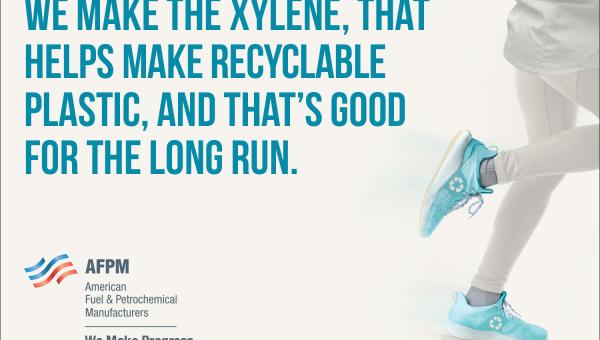
As petrochemicals and recycling advancements give old plastic new life over and over again—from shoes and clothes made of recycled plastic recovered from the ocean, to plastic bottles being chemically recycled into fuel and a raw material to make new petrochemicals—what it means to “recycle” is changing right before our eyes.
Plastic roads and buildings, the influence of energy and petrochemicals in geopolitics, and chemical and molecular recycling processes that could create a truly circular economy for plastic products were just a few of the topics discussed at AFPM’s 44th International Petrochemical Conference (IPC) in San Antonio last week.
Ottawa, Canada — As the fourth session of the United Nation’s Intergovernmental Negotiating Committee (INC-4) to create a global agreement on plastic pollution concluded Monday in Ottawa, AFPM released the following statement.
WASHINGTON, D.C. — Today, Rob Benedict, AFPM Vice President of Petrochemicals and Midstream, issued the following statement in response to the new government-wide strategy to combat plastic pollution. Paying particular attention to the elimination of single-use plastic, the strategy announces the Biden-Harris administration’s goal to phase out federal procurement of single-use plastics.
WASHINGTON, D.C. — American Fuel & Petrochemical Manufacturers (AFPM) President and CEO Chet Thompson issued the following statement today in response to reports indicating that the United States is shifting its position on the United Nations’ global agreement to end plastic pollution and will now support calls for plastic production caps and the establishment of a global list of banned chemicals. AFPM has been a participant in the United Nations’ (UN) Intergovernmental Negotiating Committee (INC) process for the past two years: