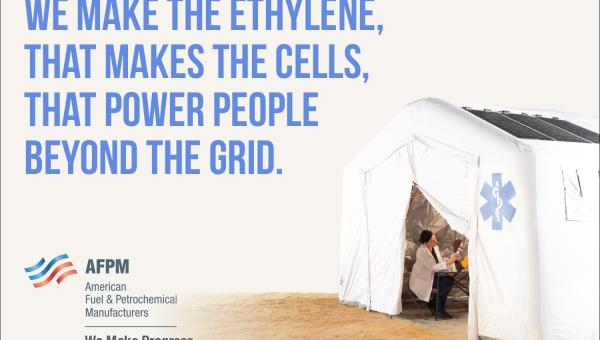
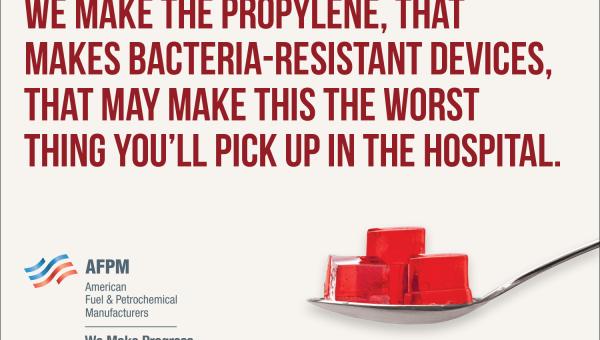
Petrochemicals derived from oil and natural gas are the building blocks for products that protect our military personnel, create medical advancements to help save lives in combat, and aid our wounded warriors.
WASHINGTON, D.C. – Rob Benedict, American Fuel & Petrochemical Manufacturers (AFPM) Vice President of Petrochemicals & Midstream, today released the following statement on the recently reintroduced Break Free from Plastic Pollution Act.
As AFPM participates in the United Nations negotiations of a global agreement on plastic pollution in Kenya, the association released the following statement addressing criticisms of recycling and calls for production restrictions on polymers.
AFPM President and CEO Chet Thompson testified before a House Energy & Commerce subcommittee on legislation aimed at preserving U.S. energy security and Americans’ ability to purchase the fuels and vehicles of their choosing while continuing to move the transportation sector in a more efficient and less carbon intensive direction.
AFPM welcomes the Environmental Protection Agency’s (EPA’s) efforts in developing a Draft National Strategy to Prevent Plastic Pollution, but consistent with comments submitted to the Agency, we urge a revision of their strategy. To prevent plastic pollution, we encourage EPA to embrace policies that enable, not hinder, a circular economy for plastics where we use a range of technologies and strategies to recover post-consumer plastic and transform it back into usable materials.
AFPM sat down with Dr. Ron Abbott, Ph.D., the Sustainability Technology Manager at Chevron Phillips Chemical. A 31-year veteran of the company and holder of 26 patents, Dr. Abbott is responsible for technical programs that advance long-term global sustainability objectives, like advanced recycling. Dr. Abbott was recently featured in AFPM’s recent “Recycling Reimagined” video.
WASHINGTON, D.C. — The American Fuel & Petrochemical Manufacturers (AFPM), the American Chemistry Council (ACC) and the Plastics Industry Association (PLASTICS) released the following statement on the General Services Administration’s (GSA) final rule calling for the reduction of single-use plastic packaging on federally supplied or purchased products.
Mowing lawns is a summertime rite of passage in America, providing young people with experience pitching their business to neighbors, keeping a work schedule, and making and managing money—from purchasing the gasoline that fuels the operation, to budgeting for the oils and lubricants that keep a mower’s engine and blades running smoothly.