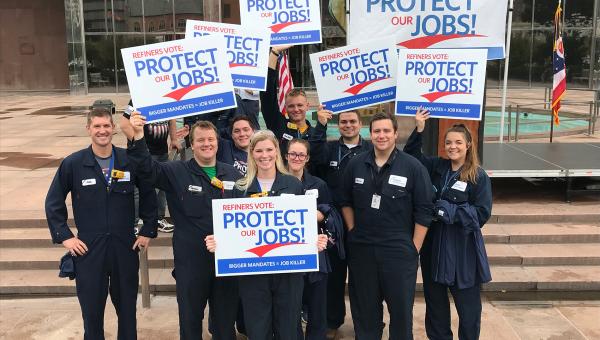
TOLEDO, OHIO – More than one hundred refinery workers, labor leaders, and elected officials from key battleground states Ohio and Michigan gathered today in Toledo.
Lupita Escandon has heard her fair share of “nos.” The mother of three young children had faced plenty of obstacles in balancing life at home with her dream of embarking on a career path for the betterment of her family and herself.
With a wave of retirements looming in the next decade, many in the petrochemical and refinery sectors are looking to a 40-year industry veteran to prepare the next generation of highly qualified workers.
Although President Obama’s controversial Clean Power Plan (CPP) has been debated at length for several months, its legal failings finally came under the microscope during oral argument in W Virginia et al. v EPA et al. in the DC Circuit Court of Appeals on September 27.
Employee health and safety is top priority for the fuel and petrochemical industries, and the COVID outbreak has necessitated a number of changes to business operations.
We took a moment to speak with Adam Ali, AFPM’s Manager of Workforce Development, about changes in the workplace employees are experiencing – including what happens when someone tests positive for COVID-19 — and actions being taken to protect and support the workforce.
As industries with deep-running safety cultures and critical roles in product supply chains, the fuel and petrochemical industries are uniquely positioned to share vital products with some of those most in need during the COVID-19 pandemic.
The fuel and petrochemical industries have a long history of supporting the communities in which they live and operate, and they have amped up that support during this difficult time.
Last week the Energy Information Administration (EIA) released its latest alternative energy update. Wind and solar power continue to lead this energy mix.