Athletes gathering for the winter Paralympics in South Korea this month are remarkable examples of how people overcome challenges – and new technologies are increasingly helping these impressive athletes push their limits by doing more, going faster or going farther.
As American manufacturers champion their contributions to economic competitiveness and product innovation today, the industry has yet another reason to celebrate – U.S. manufacturing employment is still on the rise.
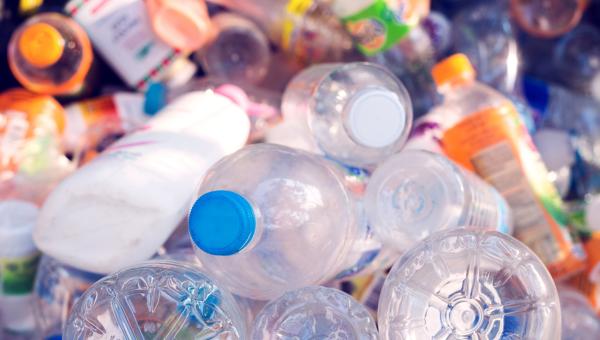
U.S. petrochemical manufacturers are at the forefront of research and development into cutting-edge solutions to give new life to used plastic products. Leveraging their in-depth understanding of plastics’ molecular composition and the manufacturing process itself, AFPM members are investing in recycling technology, infrastructure and partnerships that will reduce mismanaged plastic waste by applying unlocking its value as a feedstock.
COVID-19 upended energy markets. Demand disappeared and producers scaled back. Now that economies are reopening, and the demand for goods and services is rebounding, the demand for energy all along the supply chain is increasing, driving up not only the cost of the feedstocks and fuels refineries and petrochemical manufacturers use, but also the cost of the energy used at every step of the supply chain.
With recent plastic waste legislation from New York and New Jersey making headlines, we sat down with AFPM Senior Director of Petrochemicals, Transportation and Infrastructure Rob Benedict to discuss the petrochemical industry’s role in reducing plastic waste, new technological breakthroughs and how AFPM analyzes plastic waste policy proposals.
WASHINGTON, D.C. - This is a poorly devised bill that runs contrary to its purported purpose of improving the global environment. Banning the export of U.S. manufactured petrochemicals and polymers is shortsighted and will negatively impact global supply chains for essential materials and products.
WASHINGTON, D.C. – "Federal policy is discouraging supply by shutting down pipelines, putting future production off limits, talking down the future of the petroleum business, and imposing expensive requirements on refineries, chief among them a burdensome Renewable Fuel Standard. The Administration is blaming others when it ought to take a sober look at its own energy policy."
WASHINGTON, D.C. – This decision by the Canadian government to designate plastic manufactured items as “toxic” is unwarranted and not based in science.
The U.S. refining industry is the most competitive in the world, which is a benefit to American households. Our complex facilities are uniquely suited to handle difficult-to-refine crude oil and other petroleum feedstocks that refineries elsewhere cannot process. This creates competitive advantage. At the same time, the United States is able to sell some of our higher-quality crude to countries that need it. This combination is powerful.