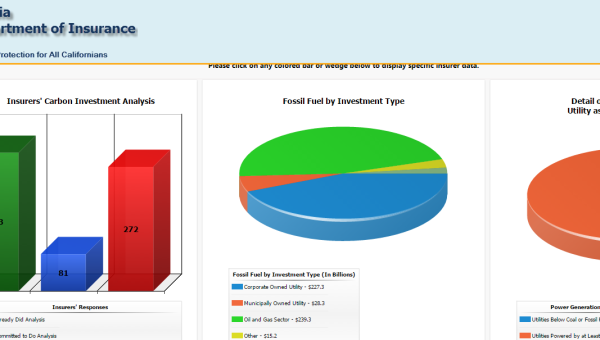
Last week, California Insurance Commissioner Dave Jones launched the latest salvo in his relentless crusade to coerce the nation’s leading insurance companies to divest from oil and natural gas company holdings.
WASHINGTON, D.C. – The American Fuel & Petrochemical Manufacturers (AFPM) has announced the winners of the 2020 Annual Safety Awards, part of an ongoing mission to enhance and recognize outstanding workplace safety.
Beyond digitization (converting analog information to digital) and digitalization (the technology-driven shift to business processes) lies digital transformation.
Safety has always been and will continue to be the top priority of the refining and petrochemical industries — which is why refiners and petrochemical manufacturers are consistently ranked in the top industries for safety, out of more than 500 U.S. manufacturing industries.
As we approach the 2022 hurricane season, experts are predicting yet another severe year, with some saying it will compare to last year. No one knows how accurate these predictions will be, but we can...
Refinery utilization, measures how much crude oil refineries are processing or “running” as a percentage of their maximum capacity. It tells us roughly how much of our refining muscle is being put to work manufacturing fuel. American refineries are running full-out, at about 95% of total capacity, contributing more fuel—gasoline, diesel, jet fuel, etc.—to the global market than any other country. In fact, U.S. refineries process more crude oil every day than the United States produces, and we make more finished fuels than the United States consumes.
With the possibility that the EPA and policymakers could make updates to the Risk Management Plan (RMP) program, there are three things we encourage them to keep in mind: 1. RMP is working as intended and keeping people safe. 2. Any changes to RMP must be evidence-based and actionable. 3. Using RMP to zero in on hydrofluoric acid (HF) alkylation at refineries could have major impacts on U.S. fuel supplies.
All eyes are on Hurricane Ian, which is expected to approach Florida’s west coast later Wednesday and into Thursday bringing high winds and massive amounts of rain. Although our nation’s refiners and petrochemical manufacturers do not have facilities in the affected region, we’d like to urge the people in the area to prepare for the storm and heed all evacuation notices. Florida residents can get critical preparedness and evacuation information here.
“Our country has seen time and again that major storms and often-correlated runs on gas stations can have a swift impact on prices. Already in Florida, some key areas are functioning with roughly 20 percent of retail stations either out of gas or out of power. That means there is less supply overall and some temporary inability to access supplies in certain Florida communities where there is, at present, heightened local demand. The market is resilient and will work to fix this imbalance swiftly, but a return to normalcy will likely not be immediate as the supply chain is complex and buyers will need to return to their normal purchasing habits."