Mowing lawns is a summertime rite of passage in America, providing young people with experience pitching their business to neighbors, keeping a work schedule, and making and managing money—from purchasing the gasoline that fuels the operation, to budgeting for the oils and lubricants that keep a mower’s engine and blades running smoothly.
The friendly skies have never been more crowded. In 2018, 4.3 billion passengers stowed their tray tables and brought their seat backs into the upright position on their way to and from wherever they wanted — or needed — to go.
WASHINGTON D.C. – The American Fuel & Petrochemical Manufacturers (AFPM) today released the following statement in response to the U.S. Senate procedural vote on the Green New Deal resolution.
Chet Thompson, President and CEO of the American Fuel & Petrochemical Manufacturers (AFPM), issued the following statement on the Environmental Protection Agency’s proposed rule regarding modifying the interpretation of Clean Air Act Section 211(h)(4) to extend the E10 volatility waiver to E15, on which AFPM today submitted comments.
New analysis has found that a Senate plan to extend the federal electric vehicle (EV) tax credit would cost taxpayers as much as $16 billion over the next decade, money that in recent years has largely gone toward the purchase of luxury electric vehicles.
AAA expects roughly 45 million travelers to head out of town and go at least 50 miles from home over the upcoming Memorial Day weekend, breaking a 20-year travel record in the process. The vast majority of these travelers—nearly 90%—are likely to be road warriors, driving cars and trucks fueled by American-made gasoline.
Members of the upstream segment explore for and extract crude oil, natural gas and natural gas liquids (NGLs). Crude oil and NGLs are used as feedstocks to produce fuels and petrochemicals, and in some cases directly as sources of energy and natural gas is used as a source of energy.
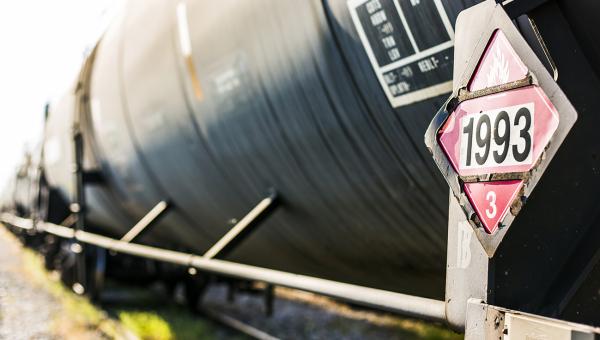
The midstream segment moves and stores feedstocks and finished products — including fuels, natural gas, natural gas liquids and petrochemical products — using an integrated system of pipelines, ports and waterways, railroads, roadways and storage facilities.
The downstream segment encompasses refineries and petrochemical manufacturing facilities that process crude oil and natural gas liquids into finished products. There are 131 operable refineries in the United States that manufacture essential energy products, including gasoline, diesel and jet fuel.