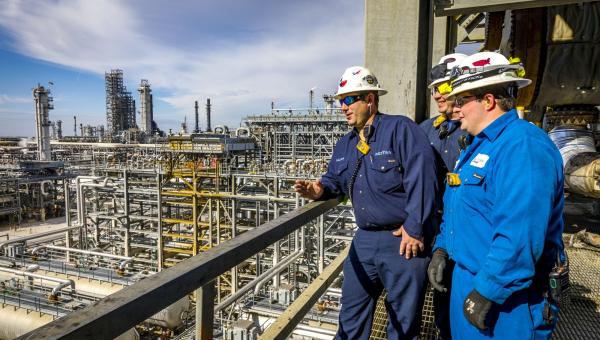
Restricting exports would be a major unforced error for the President, tightening global fuel supplies, throttling U.S. fuel production and increasing costs for American consumers. Likewise, imposing product inventory requirements boils down to siphoning gasoline and diesel into storage, and away from consumers.
AFPM's Geoff Moody issued the following statement responding to the EPA's 2023-2025 proposal for RFS blending obligations: “Congress provided EPA the ability to modernize the RFS and set it on a more sustainable course for all stakeholders. Sadly, EPA’s proposal is a missed opportunity..."
In a tight refined product market it has been U.S. refiners that have stepped up. Our industry ran full-out for most of 2022 making sure American consumers, our domestic economic centers and our allies had enough gasoline, diesel and jet fuel to keep everyone moving. Our refining sector leads the world in liquid fuel production and is effectively doing more than any other to bring better balance to the global market.
WASHINGTON, D.C. – Chet Thompson, President and CEO of the American Fuel & Petrochemical Manufacturers, today released the following statement upon the confirmation of Andrew Wheeler as Administrator of the U.S. Environmental Protection Agency.
WASHINGTON D.C. – The American Fuel & Petrochemical Manufacturers (AFPM) today released the following statement in response to the U.S. Senate procedural vote on the Green New Deal resolution.
WASHINGTON, D.C. – The American Fuel & Petrochemical Manufacturers today issued the following statement regarding the Advanced Biofuels Association’s motion for an injunction against EPA, which seeks to prevent additional small refinery exemptions under the Renewable Fuel Standard.
Rosemount, Minn. – The flame at the top of a 400-foot stack here at the Flint Hills Resources' Pine Bend refinery used to burn so brightly and so consistently that some say it was used to train pilots to land planes at the Minneapolis-St. Paul Airport.
WASHINGTON, D.C. – The American Fuel & Petrochemical Manufacturers (AFPM), a national trade association representing more than 97 percent of U.S. refiners and the majority of petrochemical manufacturers, strongly supports regulatory reform that enhances the transparency, accountability, and efficacy of federal regulations.
HOUSTON — The dog days of summer typically bring one or two hurricanes that lash the U.S. Gulf Coast. The punch of these storms, with their powerful winds and heavy rains, often has the potential to curb production at Gulf Coast refineries that together churn out nearly 50 percent of U.S. motor fuels and are crucial to our economy.