By an act of Congress and with the stroke of a pen, the Federal Aviation Administration’s (FAA) programs will continue to receive funding for the next 14 months.
Government overreach is an issue that strikes a bipartisan chord. For some, the May 19th ruling by a federal appeals court – which eliminates the Federal Aviation Administration’s (FAA) 2015 requirement that hobbyists register their drones – may serve as a badge of freedom from the perpetual gaze of “Big Brother.”
It’s been two and a half years since Congress granted the Department of Homeland Security’s Chemical Facility Anti-Terrorism Standards (CFATS) program long-term authorization.
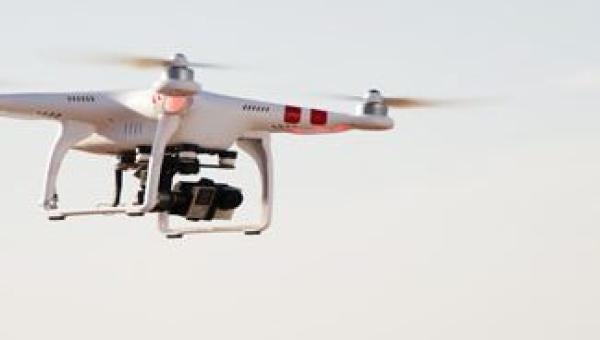
The Federal Aviation Administration (FAA) predicts there may be over five million total drones flying the national airspace by 2020. On one hand, this is great news: drones present significant...
WASHINGTON, D.C. – Today, amid concerns about the spread of COVID-19, the American Fuel & Petrochemical Manufacturers has made the difficult decision to cancel its Annual Meeting slated to take place March 22-24 in Austin, Texas, and the International Petrochemical Conference scheduled for March 29-31 in New Orleans.
WASHINGTON, D.C. – AFPM President and CEO Chet Thompson released the following statement on the rioting that took place at the U.S. Capitol on January 6, 2021.
The official beginning of the Atlantic hurricane season usually begins on June 1, but the National Hurricane Center moved it up to May 15 with the formation of an early tropical storm in the Atlantic in the first half of the month.
AFPM's Laura Berkey-Ames discusses all things drones, from their uses in the fuel and petrochemical industries, to risks and security issues, to AFPM's legislative priorities.
Jessica Falcon, Branch Chief for Compliance at the Infrastructure Security Compliance Division and Josiah Hortega, Acting Deputy Director of the Infrastructure Security Compliance Division of the Department of Homeland Security discuss CFATS.