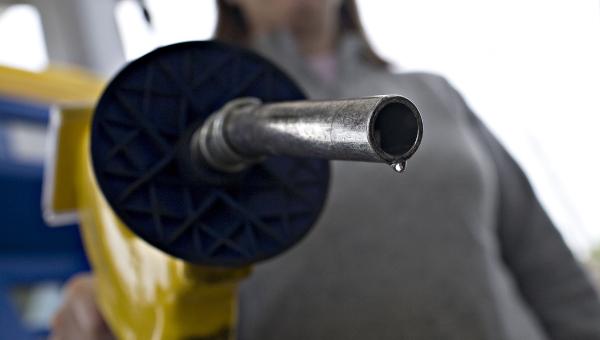
California has officially asked the Biden administration for permission to ban the sale of new gasoline and diesel vehicles by 2035—an unprecedented move that will deny millions of Americans the ability to choose for themselves the types of cars or trucks they want to drive. The decision is entirely up to President Biden...
“Just as we were proud to testify in support of these bills last month, AFPM is proud to support the legislation being marked up today...As members review these bills carefully, appreciating exactly what they do and do not do, the choice to support them should be obvious, especially for those with fuel and petrochemical manufacturing facilities in their districts.” – Chet Thompson, AFPM President & CEO
"AFPM is extremely disappointed that the Chemical Facility Anti-Terrorism Standards (CFATS) program was allowed to expire and strongly urges the Senate to pass H.R. 4470 as soon as possible so that our members can resume their longstanding, collaborative relationship with the Department of Homeland Security (DHS) via the CFATS program. Our industries remain committed to providing the best security possible while the program’s regulations remain unauthorized.."
AFPM welcomes the Environmental Protection Agency’s (EPA’s) efforts in developing a Draft National Strategy to Prevent Plastic Pollution, but consistent with comments submitted to the Agency, we urge a revision of their strategy. To prevent plastic pollution, we encourage EPA to embrace policies that enable, not hinder, a circular economy for plastics where we use a range of technologies and strategies to recover post-consumer plastic and transform it back into usable materials.
AFPM sat down with Dr. Ron Abbott, Ph.D., the Sustainability Technology Manager at Chevron Phillips Chemical. A 31-year veteran of the company and holder of 26 patents, Dr. Abbott is responsible for technical programs that advance long-term global sustainability objectives, like advanced recycling. Dr. Abbott was recently featured in AFPM’s recent “Recycling Reimagined” video.
More than 90% of American households own a car, so EPA’s proposal to ban the vast majority (about 70%) of new gasoline and diesel vehicles in less than 10 years is going to affect almost every one of us. It will set the terms for what cars and trucks we can even consider purchasing in the years ahead, and it will certainly affect those vehicle price tags; It will have massive repercussions across the U.S. economy and supply chains; It could upend and challenge U.S. energy security and potentially the reliability of our electricity.
Experts are predicting this year’s season to be similar to last or even a little less severe, with Colorado State University Tropical Forecast calling for 13 named storms, six hurricanes and two category 3 or higher hurricanes. And as they do every year, refining and petrochemical companies are doing their part to ensure they are prepared for every possible scenario and batting down the hatches, if you will.
Eight midwestern governors have petitioned the EPA seeking to opt their states out of the federal 1-pound Reid Vapor Pressure (RVP) waiver which is a requirement to sell the current summertime blend of E10 gasoline. If these requests are granted, the E10 gasoline currently sold in most of the country during summer months will no longer be offered for sale in these states and annual costs to introduce a new gasoline bend will range from $500-$800 million each year.
Transportation safety is a shared responsibility and a range of stakeholders play a part, including rail shippers, rail workers, the railroads (or rail carriers) and well-prepared emergency responders. AFPM members, as shippers, control the tank cars and rail cars we own up to the point when we hand them over to the railroads.
AFPM President & CEO Chet Thompson was a guest on a recent broadcast of “The Labor & Energy Show”, which airs up and down the Mid-Atlantic coast. Also joining as guests this episode were Kathleen...