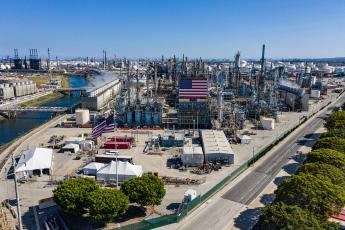
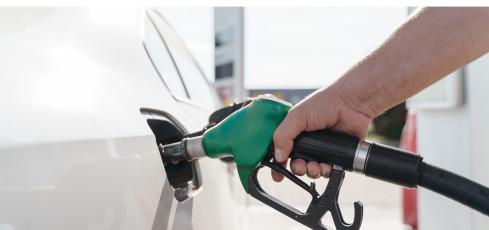
We've heard some talk lately about export bans and whether cutting off U.S. crude oil or American-made diesel, gasoline and refined products from the global market could be used as a tool to cut prices for consumers. Administration officials like Energy Secretary Chris Wright and Interior Secretary Doug Burgum see export bans as a clear unforced error, and they’re not alone. Other experts, commentators and analysts share the view that an export ban would be a costly and counterproductive mistake. It would mean less U.S. fuel production, tighter supplies, greater energy security risks and higher prices:
“Since fuels like gasoline, diesel, and jet fuel are tied to global markets, any moves to restrict US oil or gas exports could end up having the opposite effect, pushing domestic energy prices even higher.”
– John Hebert, Why Banning Oil or Gas Exports Would Be a Bad Idea, 4/3/26
“A diesel export ban would work against its own intent… the signal is permanent even if the ban is temporary. The United States became the supplier of last resort for the free world's distillate over a decade, and a ban announced to get through a midterm tells every buyer from Mexico to Germany that American supply is politically conditional. They respond by building redundancy, contracting with other suppliers, and paying a premium for reliability elsewhere…”
– Tracy Shuchart, Senior Economist, 9/15/26
“The political temptation to slash U.S. oil exports amid high fuel prices is understandable, but likely to backfire in practice. Whether imposed on crude oil, refined products, or both, export controls would not bring sustained fuel price relief. Instead, they could unleash a set of structural and geopolitical problems that could make the underlying energy affordability situation worse.”– Clayton Seigle, Center for Strategic & International Studies, 6/5/26
“While a U.S. ban on diesel exports might bring some relief to diesel prices in the short term, its longer-term consequences could potentially be “devastating,” said Rebecca Babin, a senior energy trader and managing director at CIBC Private Wealth… With an export ban in place, U.S. refiners would likely drop their diesel production significantly, but the U.S. would still need to import certain grades of gasoline and other fuels, Babin said. Those fuel products could become more expensive as refineries outside the U.S. pivot to meet the excess global demand for diesel.”– Rebecca Babin quoted in MarketWatch, 9/15/26
“Some on Capitol Hill may be tempted to go further and restrict exports of gasoline, diesel and other petroleum products. That would be even worse… Cutting off those exports would not create a neat nationwide glut of cheap fuel. Many export-oriented refineries are located far from the consuming regions that would supposedly benefit. If refiners cannot move product into export markets, many would cut refinery runs. Less refinery output means less gasoline, diesel and jet fuel — exactly the opposite of what consumers need.”– Dan Eberhart, An Oil Export Ban Would Reverse America’s Energy Dominance, 6/12/26
“Banning U.S. diesel exports would signal that America is retreating from the very markets it has spent years building. It would squeeze allies in Europe that now rely on American barrels, invite tit-for-tat measures, and do nothing to fix the structural shortage of global refining capacity. Energy security starts at home. Energy dominance is proven by reliable exports. The data and the market mechanics both say the same thing: an export ban is the wrong tool for this problem.”– Clark Savage, Why Banning Diesel Exports Will Hurt the U.S. Rather Than Help, 9/16/26
The American Fuel & Petrochemical Manufacturers (AFPM) is the leading trade association representing the makers of the fuels that keep us moving, the petrochemicals that are the essential building blocks for modern life, and the midstream companies that get our feedstocks and products where they need to go. We make the products that make life better, safer and more sustainable — we make progress.