Every year, just around Memorial Day, we start getting questions about gas prices and why they are more expensive in the summer. This year, tensions involving Iran are making that question feel more urgent.
Before we dive into the specifics around summer gas prices, let’s address the elephant in the room. The conflict in Iran is making gasoline even more expensive, on top of seasonal gasoline requirements. We’ve got a whole explainer here. But the TLDR is — supply tightened when 1/5th of the world’s crude oil went offline, but demand did not. Therefore, prices have risen.
What drives gas prices up in the summer (under normal conditions)?
Two main factors drive prices in the summer. 1. Gasoline demand is higher and 2. We use different “recipes” of gas.
Gasoline demand is highest during the summer
Americans do most of their driving (and average vehicle miles traveled hit their peak) between Memorial Day and Labor Day each year. That’s why it’s called the “summer driving season.” Warmer weather, school breaks and holiday travel, on top of regular commuting, means there are a lot more people on the road.
Even in today’s higher price environment, Americans aren’t expected to stay home. AAA projects a record 39.1 million people will travel by car over Memorial Day weekend, underscoring the enduring role of road travel in American life.
Gasoline sold during summer months is different (and more expensive to make)
The gasoline you buy in June, July and August is chemically different from what you buy in January. Appropriately, it’s called “summer gas.”
The key difference between summer gasoline blends and those sold throughout the rest of the year is volatility, or Reid Vapor Pressure (RVP), which is a measure of how easily gasoline evaporates. In hotter temperatures, higher-volatility fuel evaporates more quickly, contributing to smog and emissions. To address this and help air quality in warmer months, summer gasoline is manufactured to be less volatile.
Producing lower-volatility fuel is more complex and requires more expensive ingredients. Refineries must remove or reduce the amount of lighter, evaporative components (like butane) in their gasoline recipes and replace them with less volatile ingredients, which are costlier to produce.
What do U.S. refiners do to prepare for summer driving season?
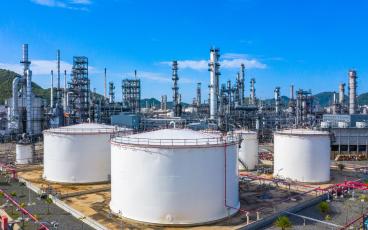
To meet increased demand, refineries increase production and operate at some of their highest utilization rates during the summer months when Americans are on the road. Simply put when Americans drive more, refineries work harder.
This uptick isn’t accidental. In fact, it’s planned months in advance. Refineries begin preparing for summer production as early as late winter.
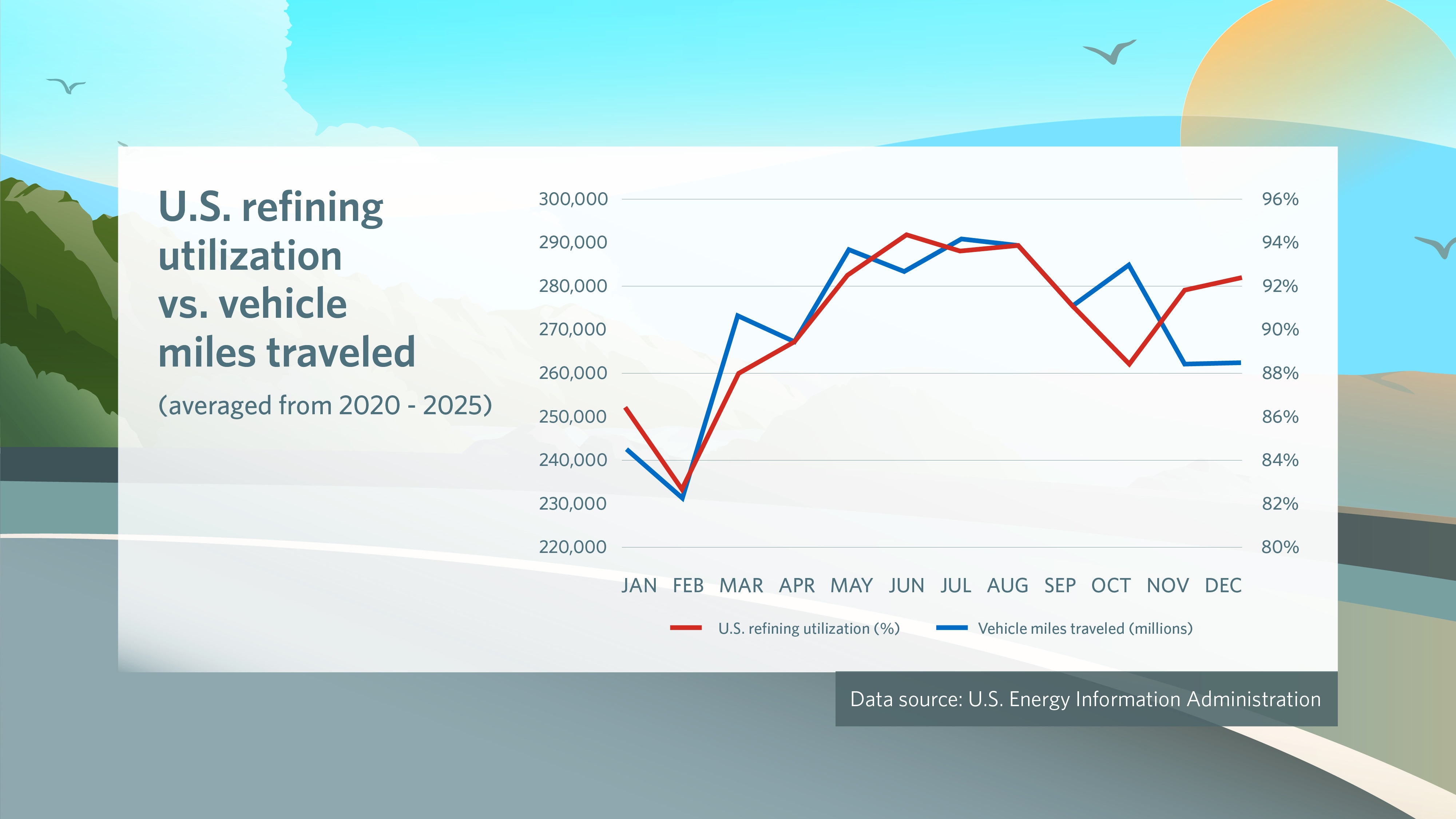
U.S. refineries produce more gasoline, diesel and jet fuel than anywhere else in the world and they work even harder — ramping up already-high production rates — in seasons and moments like these. If you want more information on what goes into the price of gas, take a look at this blog.
The American Fuel & Petrochemical Manufacturers (AFPM) is the leading trade association representing the makers of the fuels that keep us moving, the petrochemicals that are the essential building blocks for modern life, and the midstream companies that get our feedstocks and products where they need to go. We make the products that make life better, safer and more sustainable — we make progress.