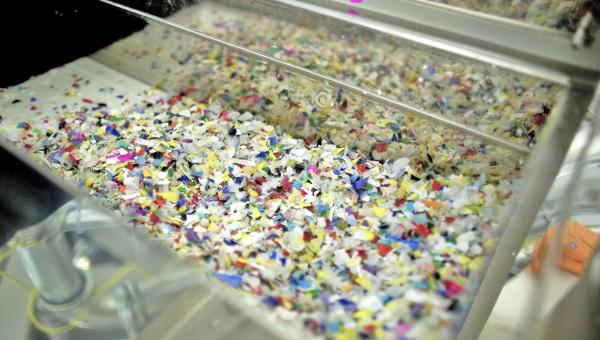
An engineer scoops a handful of tiny pellets out of a stainless-steel canister at a manufacturing plant in the Netherlands and rolls them around in his hand.
Many waste items provide important value before being tossed into a bin. Discarded plastic products, for example, originally serve as packaging to keep school lunches fresh, lightweight bottles for efficiently transporting fresh water to hard-to-reach areas, containers for soaps and detergents that facilitate hygiene – and much more.
Navigating our current health crisis offers frequent reminders of the critical role petrochemicals, particularly plastics, play in daily life — whether in the masks and gloves that protect our frontline health care providers, the containers that hold our takeout food, or the wrapping that keeps our groceries fresh and clean.