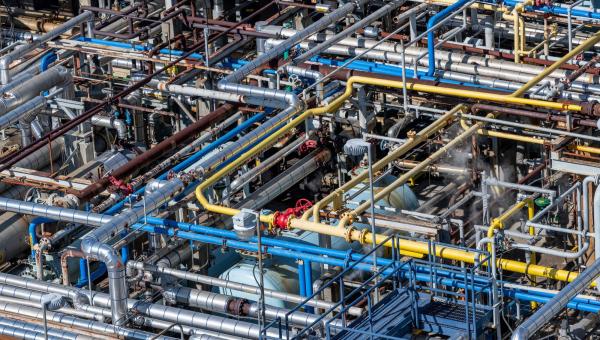
Petrochemicals derived from oil and natural gas are the building blocks for products that protect our military personnel, create medical advancements to help save lives in combat, and aid our wounded warriors.
Publicly owned companies, like many U.S. refineries, have a fiduciary responsibility (which is a legal obligation) to act in the best interest of their shareholders, and that extends to how companies spend their earnings. Often, earnings are spent on a combination of the following: direct dividends, stock buy back programs, paying down debt and capital investment projects.
AFPM President and CEO Chet Thompson issued the following statement in response to President Biden’s State of the Union address: "Using the State of the Union to politicize market fundamentals and single out stock “buy back” programs—while overlooking the fact that the Biden administration’s own policies discourage the reinvestment of earnings back into the U.S. liquid fuel supply chain—cheapens the dialog for everyone."
WASHINGTON, D.C. – Rob Benedict, American Fuel & Petrochemical Manufacturers (AFPM) Vice President of Petrochemicals & Midstream, today released the following statement on the recently reintroduced Break Free from Plastic Pollution Act.
As AFPM participates in the United Nations negotiations of a global agreement on plastic pollution in Kenya, the association released the following statement addressing criticisms of recycling and calls for production restrictions on polymers.
AFPM President and CEO Chet Thompson issued the following statement in response to the White House’s latest announcement of a release of crude oil from the SPR: “The SPR was never meant to serve as a substitute for actual crude oil production. At best, SPR releases are a short-term fix, not a long-term solution or signal of stability to a market craving reassurance..."
AFPM President and CEO Chet Thompson issued the following statement regarding President Biden’s suggestion that a Windfall Profit Tax should be considered to address fuel supplies and prices: “Once again, the President is more worried about political posturing before the Midterms than he is about advancing energy policies that will actually deliver for the American people."
Restricting exports would be a major unforced error for the President, tightening global fuel supplies, throttling U.S. fuel production and increasing costs for American consumers. Likewise, imposing product inventory requirements boils down to siphoning gasoline and diesel into storage, and away from consumers.
AFPM President and CEO Chet Thompson issued the following statement on the Environmental Protection Agency’s (EPA’s) proposal of light- and heavy-duty vehicle GHG emission standards: "EPA's proposal to effectively ban gasoline and diesel vehicles is bad for consumers, the environment, our freedom of mobility and U.S. national security. It’s unconscionable that the Administration would propose this knowing full well that China controls 80% of global battery production capacity..."
AFPM welcomes the Environmental Protection Agency’s (EPA’s) efforts in developing a Draft National Strategy to Prevent Plastic Pollution, but consistent with comments submitted to the Agency, we urge a revision of their strategy. To prevent plastic pollution, we encourage EPA to embrace policies that enable, not hinder, a circular economy for plastics where we use a range of technologies and strategies to recover post-consumer plastic and transform it back into usable materials.