Mowing lawns is a summertime rite of passage in America, providing young people with experience pitching their business to neighbors, keeping a work schedule, and making and managing money—from purchasing the gasoline that fuels the operation, to budgeting for the oils and lubricants that keep a mower’s engine and blades running smoothly.
The friendly skies have never been more crowded. In 2018, 4.3 billion passengers stowed their tray tables and brought their seat backs into the upright position on their way to and from wherever they wanted — or needed — to go.
Plastic roads and buildings, the influence of energy and petrochemicals in geopolitics, and chemical and molecular recycling processes that could create a truly circular economy for plastic products were just a few of the topics discussed at AFPM’s 44th International Petrochemical Conference (IPC) in San Antonio last week.
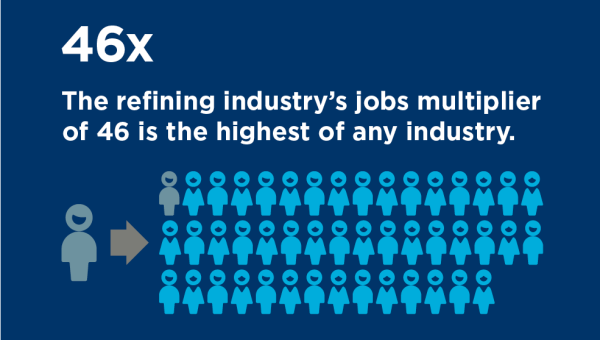
The U.S. refining industry has a widespread economic impact on our nation. It supports millions of American jobs and pumps billions of dollars into the economy, as documented by the new AFPM report Economic Contributions of U.S. Petroleum Refineries. Report highlights, based on the latest full year of data available through IMPLAN (2022), are featured in this blog.
WASHINGTON, D.C. — American Fuel & Petrochemical Manufacturers (AFPM) President and CEO Chet Thompson issued the following statement on the final results of the 2024 general election.
There are many different opportunities and career paths in the fuel and petrochemical industries. Here are a few programs to help you get moving in the right direction.