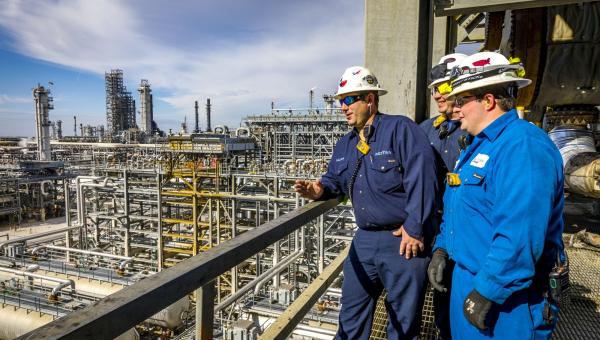
One of the most significant challenges facing the fuel and petrochemical industries is finding the next generation of craft professionals ranging from electricians to millwrights to everything in between.
For more than 100 years, the women and men of our industries have answered the call to serve when our country needed them. Through war, economic shocks, and natural disasters, refiners and petrochemical manufacturers have helped build new industries, grow our economy and fuel progress.
WASHINGTON, D.C. – The United Steelworkers—on behalf of their 1.2 million active and retired members, and the American Fuel & Petrochemical Manufacturers, in a joint letter, have petitioned President Biden to fill the four empty seats on the Chemical Safety & Hazards Investigations Board (CSB).
We are surprised and disappointed by the President’s letter. Any suggestion that U.S. refiners are not doing our part to bring stability to the market is false. We would encourage the Administration to look inward to better understand the role their policies and hostile rhetoric have played in the current environment.
With the possibility that the EPA and policymakers could make updates to the Risk Management Plan (RMP) program, there are three things we encourage them to keep in mind: 1. RMP is working as intended and keeping people safe. 2. Any changes to RMP must be evidence-based and actionable. 3. Using RMP to zero in on hydrofluoric acid (HF) alkylation at refineries could have major impacts on U.S. fuel supplies.
EPA’s existing Risk Management Plan (RMP) is doing what it was designed to do: drive continual safety improvements across workplaces to keep industry employees, contractors, facility neighbors and local environments safe. Any changes to a regulation as effective as the RMP need to be solidly evidence-based. Unfortunately, today’s proposal is filled with costly and misinformed changes, with little-to-no data to back them up. In fact, many of the proposed changes will adversely impact the safety and security missions of refining and petrochemical sites. AFPM looks forward to providing detailed comments on this proposal.
Because of the extensive safety and mitigation steps refiners take wherever hydrofluoric acid (HF) alkylation is concerned, the risks from this process pale in comparison to those we assume every day when we engage in routine activities like riding a bike, driving a car and playing with pets.
In a tight refined product market it has been U.S. refiners that have stepped up. Our industry ran full-out for most of 2022 making sure American consumers, our domestic economic centers and our allies had enough gasoline, diesel and jet fuel to keep everyone moving. Our refining sector leads the world in liquid fuel production and is effectively doing more than any other to bring better balance to the global market.