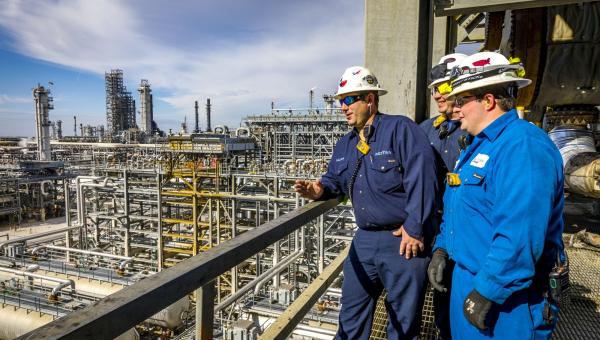
EPA’s existing Risk Management Plan (RMP) is doing what it was designed to do: drive continual safety improvements across workplaces to keep industry employees, contractors, facility neighbors and local environments safe. Any changes to a regulation as effective as the RMP need to be solidly evidence-based. Unfortunately, today’s proposal is filled with costly and misinformed changes, with little-to-no data to back them up. In fact, many of the proposed changes will adversely impact the safety and security missions of refining and petrochemical sites. AFPM looks forward to providing detailed comments on this proposal.
Because of the extensive safety and mitigation steps refiners take wherever hydrofluoric acid (HF) alkylation is concerned, the risks from this process pale in comparison to those we assume every day when we engage in routine activities like riding a bike, driving a car and playing with pets.
In a tight refined product market it has been U.S. refiners that have stepped up. Our industry ran full-out for most of 2022 making sure American consumers, our domestic economic centers and our allies had enough gasoline, diesel and jet fuel to keep everyone moving. Our refining sector leads the world in liquid fuel production and is effectively doing more than any other to bring better balance to the global market.
WASHINGTON, D.C. – The American Fuel & Petrochemical Manufacturers (AFPM) has announced the winners of the 2018 Annual Safety Awards, part of an ongoing mission to enhance and recognize outstanding workplace safety.
AFPM’s online Safety Portal serves as the hub for all Occupational and Process Safety programs. Access to the Safety Portal is available to all member operating companies who have a signed Corporate User Agreement with AFPM.
Rosemount, Minn. – The flame at the top of a 400-foot stack here at the Flint Hills Resources' Pine Bend refinery used to burn so brightly and so consistently that some say it was used to train pilots to land planes at the Minneapolis-St. Paul Airport.
Our members continuously look for opportunities to enhance safety and recognize that an effective way to improve process safety performance throughout the industry is to learn from one other. Advancing Process Safety is a collection of programs that provide the industry with more frequent and effective opportunities to share experiences and knowledge.
AFPM collects occupational injury and illness data from all regular member refining and petrochemical sites in the U.S. annually. The information collected is from the OSHA 300A Summary Log for both company employees and contractors (contractor aggregate). This data is used to compile the AFPM Survey of Occupational Injuries & Illnesses (I&I Survey). Sites that submit data may be eligible for AFPM Safety Awards.