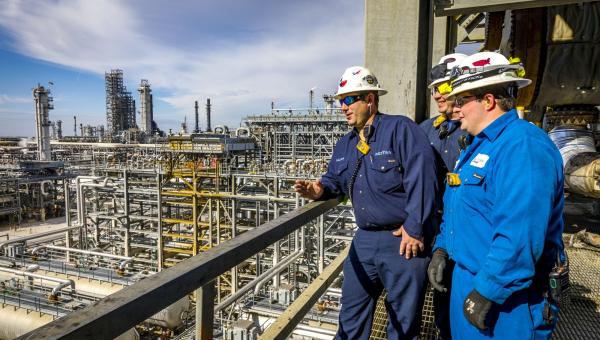
The U.S. petrochemical industry has a crucial and enduring role to play in meeting the needs of a growing world population while simultaneously fulfilling the imperative to produce petrochemicals in a sustainable and clean manner.
All eyes are on Hurricane Ian, which is expected to approach Florida’s west coast later Wednesday and into Thursday bringing high winds and massive amounts of rain. Although our nation’s refiners and petrochemical manufacturers do not have facilities in the affected region, we’d like to urge the people in the area to prepare for the storm and heed all evacuation notices. Florida residents can get critical preparedness and evacuation information here.
Petrochemicals derived from oil and natural gas are the building blocks for products that protect our military personnel, create medical advancements to help save lives in combat, and aid our wounded warriors.
WASHINGTON, D.C. – Rob Benedict, American Fuel & Petrochemical Manufacturers (AFPM) Vice President of Petrochemicals & Midstream, today released the following statement on the recently reintroduced Break Free from Plastic Pollution Act.
As AFPM participates in the United Nations negotiations of a global agreement on plastic pollution in Kenya, the association released the following statement addressing criticisms of recycling and calls for production restrictions on polymers.
AFPM welcomes the Environmental Protection Agency’s (EPA’s) efforts in developing a Draft National Strategy to Prevent Plastic Pollution, but consistent with comments submitted to the Agency, we urge a revision of their strategy. To prevent plastic pollution, we encourage EPA to embrace policies that enable, not hinder, a circular economy for plastics where we use a range of technologies and strategies to recover post-consumer plastic and transform it back into usable materials.
AFPM sat down with Dr. Ron Abbott, Ph.D., the Sustainability Technology Manager at Chevron Phillips Chemical. A 31-year veteran of the company and holder of 26 patents, Dr. Abbott is responsible for technical programs that advance long-term global sustainability objectives, like advanced recycling. Dr. Abbott was recently featured in AFPM’s recent “Recycling Reimagined” video.
In a tight refined product market it has been U.S. refiners that have stepped up. Our industry ran full-out for most of 2022 making sure American consumers, our domestic economic centers and our allies had enough gasoline, diesel and jet fuel to keep everyone moving. Our refining sector leads the world in liquid fuel production and is effectively doing more than any other to bring better balance to the global market.
WASHINGTON, D.C. — The American Fuel & Petrochemical Manufacturers (AFPM), the American Chemistry Council (ACC) and the Plastics Industry Association (PLASTICS) released the following statement on the General Services Administration’s (GSA) final rule calling for the reduction of single-use plastic packaging on federally supplied or purchased products.
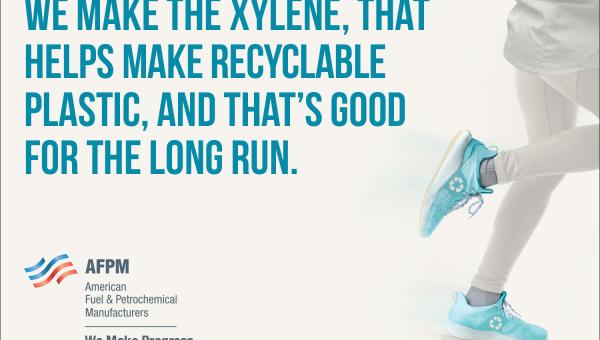
As petrochemicals and recycling advancements give old plastic new life over and over again—from shoes and clothes made of recycled plastic recovered from the ocean, to plastic bottles being chemically recycled into fuel and a raw material to make new petrochemicals—what it means to “recycle” is changing right before our eyes.