In a health care revolution, the Cardiac 3D Print Lab at Phoenix Children’s Hospital is making model organs out of plastics to help save children’s lives.
Athletes gathering for the winter Paralympics in South Korea this month are remarkable examples of how people overcome challenges – and new technologies are increasingly helping these impressive athletes push their limits by doing more, going faster or going farther.
The renegotiation of the North American Free Trade Agreement (NAFTA) provides an important opportunity to preserve and strengthen NAFTA’s investor protections, specifically the investor-state dispute settlement (ISDS) mechanism.
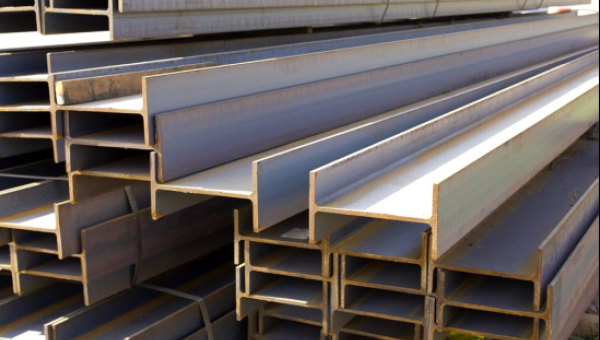
The American Fuel & Petrochemical Manufacturers (AFPM) has expressed concern about the impact that steel and aluminum tariffs would have on prices at the pump, infrastructure investment and jobs.
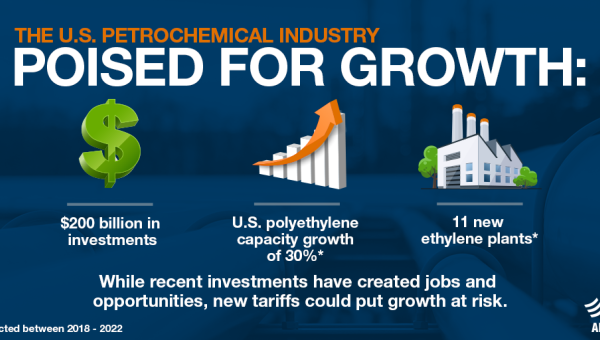
One of America’s major strengths when it comes to the economy and global trade is our petrochemical industry, which produces the building blocks used in manufacturing supply chains across the globe.
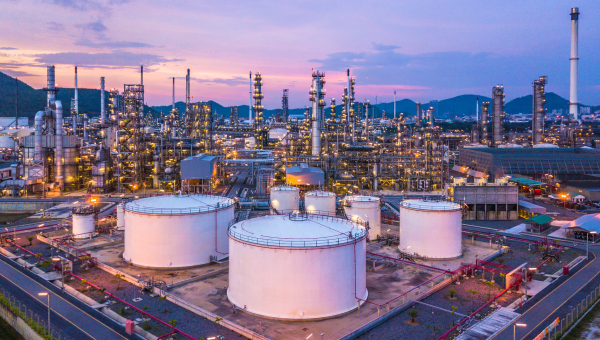
U.S. refineries are the most complex in the world, allowing them to extract more value out of each barrel of oil than any other refining system globally. This competitive edge is made possible by access to global markets.
The United States is the now largest producer of crude oil and has the largest, most complex and most efficient refining industry in the world. Yet two of our most important oil trading partners are those that share our borders: Canada and Mexico.
U.S. petrochemical manufacturers are at the forefront of research and development into cutting-edge solutions to give new life to used plastic products. Leveraging their in-depth understanding of plastics’ molecular composition and the manufacturing process itself, AFPM members are investing in recycling technology, infrastructure and partnerships that will reduce mismanaged plastic waste by applying unlocking its value as a feedstock.
COVID-19 upended energy markets. Demand disappeared and producers scaled back. Now that economies are reopening, and the demand for goods and services is rebounding, the demand for energy all along the supply chain is increasing, driving up not only the cost of the feedstocks and fuels refineries and petrochemical manufacturers use, but also the cost of the energy used at every step of the supply chain.