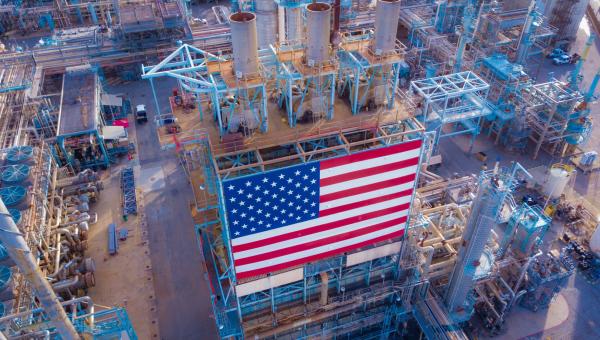
The U.S. refining industry is the most competitive in the world, which is a benefit to American households. Our complex facilities are uniquely suited to handle difficult-to-refine crude oil and other petroleum feedstocks that refineries elsewhere cannot process. This creates competitive advantage. At the same time, the United States is able to sell some of our higher-quality crude to countries that need it. This combination is powerful.
Oil markets are famously sensitive to uncertainty. Global conflict can send prices higher on concerns that crude oil supplies could be disrupted. This is playing out in response to Russia’s unprovoked acts of war against Ukraine. Russia is a major supplier of crude oil and other energy products globally, though less so in the United States. In recent days, many market participants have committed to stop purchasing Russian oil. Shipping companies are concerned about loading cargoes from Russia and some shippers are finding the cost associated with such cargoes too high. These moves are tightening an already tight market.
The American Fuel and Petrochemical Manufacturers (AFPM) President and CEO Chet Thompson and American Petroleum Institute (API) President and CEO Mike Sommers today sent a letter to U.S. Secretary of Energy Jennifer Granholm raising significant concerns that the administration could pursue a ban or limits on refined petroleum products. “Banning or limiting the export of refined products would likely decrease inventory levels, reduce domestic refining capacity, put upward pressure on consumer fuel prices, and alienate U.S. allies during a time of war,” Thompson and Sommers wrote.
EPA’s existing Risk Management Plan (RMP) is doing what it was designed to do: drive continual safety improvements across workplaces to keep industry employees, contractors, facility neighbors and local environments safe. Any changes to a regulation as effective as the RMP need to be solidly evidence-based. Unfortunately, today’s proposal is filled with costly and misinformed changes, with little-to-no data to back them up. In fact, many of the proposed changes will adversely impact the safety and security missions of refining and petrochemical sites. AFPM looks forward to providing detailed comments on this proposal.
AFPM director of transportation and infrastructure, Rob Benedict, discusses the potential impacts proposed steel tariffs would have on the fuels and petrochemical industries.
Because of the extensive safety and mitigation steps refiners take wherever hydrofluoric acid (HF) alkylation is concerned, the risks from this process pale in comparison to those we assume every day when we engage in routine activities like riding a bike, driving a car and playing with pets.
SPR releases cannot be the center of this Administration’s strategy to confront inflation and high energy prices. At best, SPR releases are a short-term fix, they are not a solution. Stability and certainty is what global crude oil markets crave.
H.R. 1 is an investment in U.S. energy security. Fuel and petrochemical manufacturers, and the energy infrastructure companies that make it possible to get our feedstocks and products from point A to point B, welcome the additional clarity and regulatory certainty this legislation will provide.
The American Fuel & Petrochemical Manufacturers (AFPM) today released a new video highlighting the safety approach and measures used by U.S. refineries with hydrofluoric acid (HF) alkylation units.
Governor Gavin Newsom continues to blame fuel refiners for California’s highest-in-the-nation fuel prices. He couldn't be more wrong. The problem and solution to much of California’s fuel price challenge can be found in Sacramento policy. Take a look to better understand the role of policy in regional price differences, why it’s inaccurate to equate “margins” or “refinery cracks” with “profits,” and why windfall profit taxes are a known policy failure.