Alongside the publication of AFPM’s new study, “The Fuel & Petrochemical Supply Chains: Moving the Fuels & Products That Power Progress,” Flash Point interviewed leaders working on U.S. midstream infrastructure issues.
The latest job numbers out today (Friday, September 7th) once again paint a rosy picture of the U.S. economy – 201,000 jobs were added in August, above expectations, and wages continued to increase.
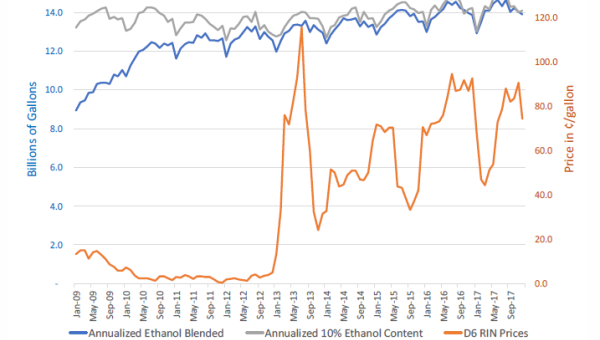
There is a fundamental flaw in the system designed to ensure compliance with the Renewable Fuel Standard (RFS): The assumption that refiners would not blend ethanol into their fuel were it not for the policy and its threat of crippling costs being imposed on obligated parties who do not blend.
During a recent visit to Iowa — smack in the middle of corn country — the President announced a policy change that would direct the Environmental Protection Agency (EPA) to waive Clean Air Act rules and permit the year-round sale of E15 (gasoline with 15-percent ethanol).
The corn lobby has falsely claimed recently that waivers granted by the EPA to small refiners—relieving them from the onerous costs of complying with the Renewable Fuel Standard (RFS)—have destroyed demand for ethanol. Nothing could be further from the truth.
AFPM has joined five other associations to call on the Governors of eight states to reject a recent plea from the Auto Alliance – the leading advocacy group for automakers – to increase subsidies and other incentives for electric vehicles (EVs) and zero-emission vehicles (ZEVs), further distorting a market that has failed to materialize despite already receiving generous handouts.
As American manufacturers champion their contributions to economic competitiveness and product innovation today, the industry has yet another reason to celebrate – U.S. manufacturing employment is still on the rise.
Twenty senators delivered a letter to President Trump yesterday firmly stating their opposition to rumored regulatory action to expand the sale of E15 fuel.
It should come as a surprise to congressional supporters of the Energy Independence and Security Act (EISA), that their 2007 votes to expand the Renewable Fuel Standard (RFS) to advance “homegrown energy” would lead to historic U.S. imports of biodiesel