The Line 5 pipeline plays a critical role in ensuring the United States and Canada continue to have access to affordable fuels, propane and other refined products. Union, political and business leaders on both sides of the border are emphasizing the critical role of the Line 5 pipeline and calling for it to remain open until its replacement can be completed:
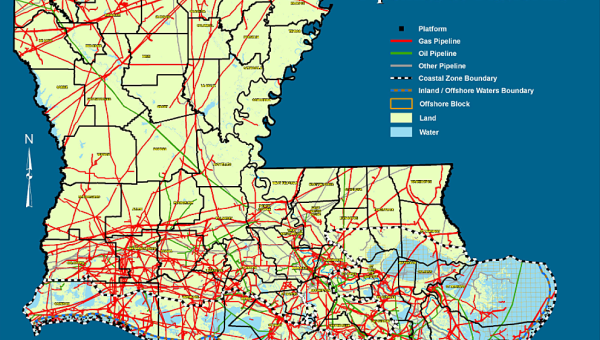
OK, all you anti-pipeline activists, it’s time for a pop quiz: Can you identify on the map below where the proposed Bayou Bridge pipeline will be built? How about if we narrow it down to a map of just...
In 2015, after years of building a collection of over 600 pipeline real-world “test specimens” to be used for advanced pipeline safety research, the Pipeline Research Council International (PRCI) opened the Technology Development Center (TDC) in Houston, Texas.
WASHINGTON, D.C. – Yesterday the Federal Railroad Administration published its Rail Integrity and Track Safety Standards final rule in the Federal Register.
To address freight rail concerns, leaders from LyondellBasell and the Surface Transportation Board (STB) held discussions and toured LyondellBasell’s facility in Morris, Illinois. LyondellBasell’s Morris Complex is unique in that it is served by more than one major rail carrier. Nearly 80 percent of U.S. refineries and petrochemical facilities operate in regions served by just one freight rail provider.
We are surprised and disappointed by the President’s letter. Any suggestion that U.S. refiners are not doing our part to bring stability to the market is false. We would encourage the Administration to look inward to better understand the role their policies and hostile rhetoric have played in the current environment.
To produce essential goods for U.S. and global consumers, AFPM members need a safe, reliable and efficient rail system to move materials to and from refineries and petrochemical facilities.
The United States has the most complex and efficient refining industry in the world, but we also have less refining capacity than we used to. Where the issue of refining capacity is concerned, it’s important to understand what refining capacity is, why we’ve lost capacity in the United States and how policies can advance the competitiveness of our refineries in the global market.
Some policymakers are rumored to be considering a ban on crude oil and/or U.S. refined product exports. This would be a mistake. Ending U.S. crude oil or refined product exports won’t help U.S. consumers by lowering prices at pump. In fact, it could make things even worse. Let’s take a closer look at how a refined product export ban would affect gasoline and diesel supplies and, thus, prices in the United States and around the world.