The waiver to the Jones Act provided by the Department of Homeland Security is already proving helpful in the wake of Hurricanes Harvey and Irma, both of which affected important energy infrastructure...
This week, AFPM joined API and industry associations representing fuel retailers, gasoline marketers, convenience stores and tank truck carriers to field questions from the media about the ongoing fuel distribution challenges resulting from the Colonial Pipeline shutdown.
Diesel inventories in the United States and around the world are low and there is growing concern about what tight supplies could mean heading into a cold winter. Below, AFPM’s industry analysts explain (1) what’s behind this particular supply chain challenge, (2) how U.S. refiners are adapting operations to meet consumer needs (i.e., running full out and maximizing distillate production) and (3) the role government might play in bringing about resolution.
Restricting exports would be a major unforced error for the President, tightening global fuel supplies, throttling U.S. fuel production and increasing costs for American consumers. Likewise, imposing product inventory requirements boils down to siphoning gasoline and diesel into storage, and away from consumers.
Oil markets are famously sensitive to uncertainty. Global conflict can send prices higher on concerns that crude oil supplies could be disrupted. This is playing out in response to Russia’s unprovoked acts of war against Ukraine. Russia is a major supplier of crude oil and other energy products globally, though less so in the United States. In recent days, many market participants have committed to stop purchasing Russian oil. Shipping companies are concerned about loading cargoes from Russia and some shippers are finding the cost associated with such cargoes too high. These moves are tightening an already tight market.
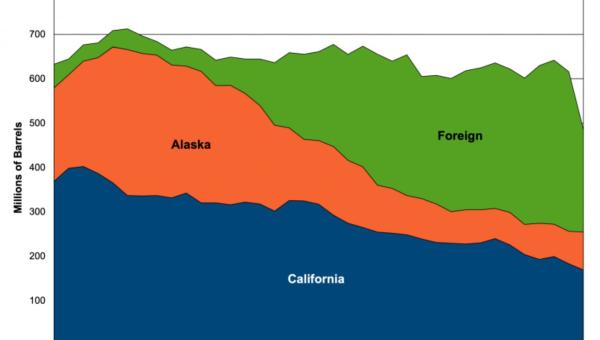
Limiting California’s access to the exact types of crude oil its facilities need will only increase prices for the state’s consumers and travelers. Drivers are already dealing with gasoline prices in excess of $5 per gallon and the highest fuel taxes of the 50 states. Confining energy producers and consumers to a smaller pool of crude oil will make a very sensitive price environment that much worse.
Washington, D.C., December 4, 2023 – Today, ahead of the House of Representatives’ consideration of H.R. 4468, the Choice in Automobile Retail Sales Act (CARS Act), the American Fuel & Petrochemical Manufacturers (AFPM) released the results of a national survey fielded among n=1,089 likely general election voters. The data show Americans strongly oppose EPA’s vehicle tailpipe emissions proposal for model years 2027-2032 and are less likely to vote for candidates who support banning sales of gas-fueled vehicles.
WASHINGTON, D.C. – AFPM President and CEO Chet Thompson issued the following statement today applauding the bipartisan passage of the Choice in Automobile Retail Sales Act (CARS Act), H.R. 4468, from the House of Representatives.
A new letter from a coalition of nearly 60 national and state energy, fuel retailer, auto parts and agriculture groups was just sent to House Speaker Mike Johnson and Minority Leader Hakeem Jeffries urging bipartisan support for H.R. 4468, the Choice in Automobile Retail Sales Act (CARS Act), ahead of Wednesday’s scheduled vote on the measure.
WASHINGTON, D.C., October 19, 2023—American Fuel & Petrochemical Manufacturers (AFPM) President and CEO Chet Thompson issued the following statement in support of the Choice in Automobile Retail Sales (CARS) Act introduced by Senators Mike Crapo (R-ID) and Pete Ricketts (R-NE).