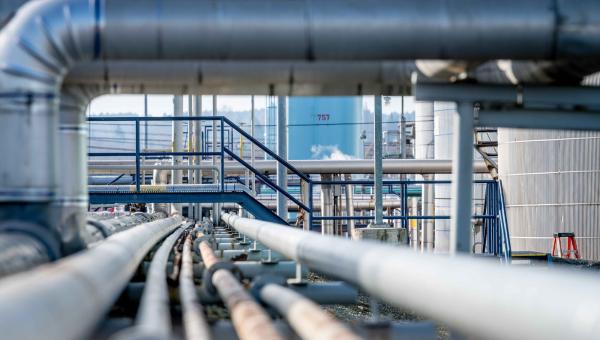
Russian crude oil accounts for just three percent of U.S. crude oil imports and about one percent of total crude oil processed by U.S. refineries. Even still, Russian crude oil imports are important to refineries on the West Coast and Gulf Coast for some distinct reasons. Read more on this topic from AFPM’s industry analysts in their recent assessment: “U.S. Imports of Crude Oil and Petroleum Products from Russia.”
The American Fuel & Petrochemical Manufacturers (AFPM) and American Petroleum Institute (API) today released the following statement after a meeting that included Secretary of Energy Jennifer Granholm, senior White House officials and leaders of the top U.S. refining companies
The American Fuel and Petrochemical Manufacturers (AFPM) President and CEO Chet Thompson and American Petroleum Institute (API) President and CEO Mike Sommers today sent a letter to U.S. Secretary of Energy Jennifer Granholm raising significant concerns that the administration could pursue a ban or limits on refined petroleum products. “Banning or limiting the export of refined products would likely decrease inventory levels, reduce domestic refining capacity, put upward pressure on consumer fuel prices, and alienate U.S. allies during a time of war,” Thompson and Sommers wrote.
AFPM opposes the Inflation Reduction Act as written. We evaluated the bill against our core principles, specifically whether the legislation would support strong U.S. refining and petrochemical industries and whether it pursued emissions reductions in a market-based and cost-effective manner. Unfortunately, the IRA falls short of these goals.
Thursday, August 18, AFPM President and CEO Chet Thompson sent a letter to House Transportation and Infrastructure Committee Chairman Peter DeFazio (D-OR) and Ranking Member Sam Graves (R-MO) making...
Because of the extensive safety and mitigation steps refiners take wherever hydrofluoric acid (HF) alkylation is concerned, the risks from this process pale in comparison to those we assume every day when we engage in routine activities like riding a bike, driving a car and playing with pets.
SPR releases cannot be the center of this Administration’s strategy to confront inflation and high energy prices. At best, SPR releases are a short-term fix, they are not a solution. Stability and certainty is what global crude oil markets crave.
The American Fuel & Petrochemical Manufacturers (AFPM) today released a new video highlighting the safety approach and measures used by U.S. refineries with hydrofluoric acid (HF) alkylation units.
Governor Gavin Newsom continues to blame fuel refiners for California’s highest-in-the-nation fuel prices. He couldn't be more wrong. The problem and solution to much of California’s fuel price challenge can be found in Sacramento policy. Take a look to better understand the role of policy in regional price differences, why it’s inaccurate to equate “margins” or “refinery cracks” with “profits,” and why windfall profit taxes are a known policy failure.
Restricting exports would be a major unforced error for the President, tightening global fuel supplies, throttling U.S. fuel production and increasing costs for American consumers. Likewise, imposing product inventory requirements boils down to siphoning gasoline and diesel into storage, and away from consumers.