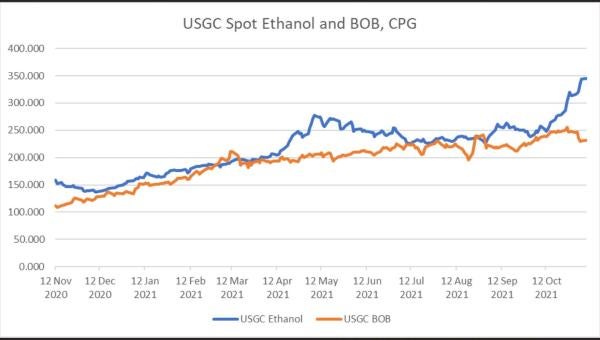
If the Biden Administration is serious about helping consumers, it needs to adopt policies that promote U.S. energy production and refining. A good place to start would be right-sizing RFS mandates.
WASHINGTON, D.C. – "Federal policy is discouraging supply by shutting down pipelines, putting future production off limits, talking down the future of the petroleum business, and imposing expensive requirements on refineries, chief among them a burdensome Renewable Fuel Standard. The Administration is blaming others when it ought to take a sober look at its own energy policy."
AFPM President and CEO Chet Thompson and API President and CEO Mike Sommers sent a letter to President Biden responding to recent letters the Administration sent to major U.S. fuel refiners suggesting that these companies, their workforces and facilities throughout the country aren’t doing their part to bring fuel to the market and lower energy costs for consumers.
We are surprised and disappointed by the President’s letter. Any suggestion that U.S. refiners are not doing our part to bring stability to the market is false. We would encourage the Administration to look inward to better understand the role their policies and hostile rhetoric have played in the current environment.
American Fuel & Petrochemical Manufacturers CEO Chet Thompson today issued the following statement on the Biden administration’s announcement that it plans to invoke emergency waiver authority under the Clean Air Act to allow for the incremental sale of E15 fuel this summer.
Today, the American Fuel & Petrochemical Manufacturers (AFPM) issued the following statement regarding revisions made to the National Environmental Policy Act (NEPA) Phase 1 regulations by the Council on Environmental Quality.
With the possibility that the EPA and policymakers could make updates to the Risk Management Plan (RMP) program, there are three things we encourage them to keep in mind: 1. RMP is working as intended and keeping people safe. 2. Any changes to RMP must be evidence-based and actionable. 3. Using RMP to zero in on hydrofluoric acid (HF) alkylation at refineries could have major impacts on U.S. fuel supplies.