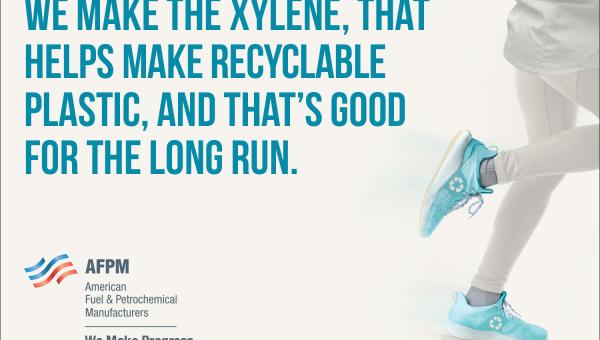
Polyester soccer jerseys, polyethylene swim lane dividers, carbon track shoe insoles, and the jet fuel that moves athletes all over the world. These are just a few examples of the and fuels and petrochemical-based materials that play an irreplaceable role in summer sports.
The U.S. petrochemical industry has a crucial and enduring role to play in meeting the needs of a growing world population while simultaneously fulfilling the imperative to produce petrochemicals in a sustainable and clean manner.
As petrochemicals and recycling advancements give old plastic new life over and over again—from shoes and clothes made of recycled plastic recovered from the ocean, to plastic bottles being chemically recycled into fuel and a raw material to make new petrochemicals—what it means to “recycle” is changing right before our eyes.
Plastic roads and buildings, the influence of energy and petrochemicals in geopolitics, and chemical and molecular recycling processes that could create a truly circular economy for plastic products were just a few of the topics discussed at AFPM’s 44th International Petrochemical Conference (IPC) in San Antonio last week.
WASHINGTON D.C. – Chet Thompson, president and CEO of the American Fuel & Petrochemical Manufacturers (AFPM), today released the following statement in response to the Environmental Protection Agency’s efforts to modify how it approaches cost-benefit evaluations of its environmental rules.