Governor Gavin Newsom continues to blame fuel refiners for California’s highest-in-the-nation fuel prices. He couldn't be more wrong. The problem and solution to much of California’s fuel price challenge can be found in Sacramento policy. Take a look to better understand the role of policy in regional price differences, why it’s inaccurate to equate “margins” or “refinery cracks” with “profits,” and why windfall profit taxes are a known policy failure.
Restricting exports would be a major unforced error for the President, tightening global fuel supplies, throttling U.S. fuel production and increasing costs for American consumers. Likewise, imposing product inventory requirements boils down to siphoning gasoline and diesel into storage, and away from consumers.
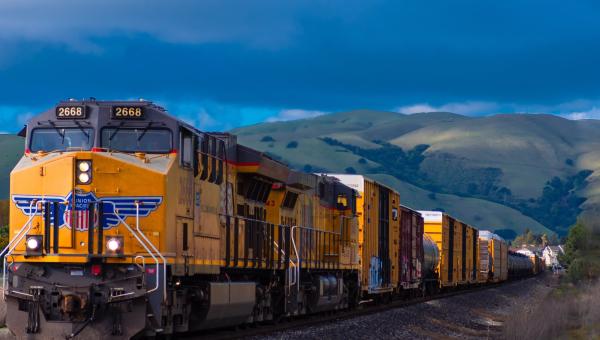
America’s freight rail system is an essential part of our national and global supply chains, including those for fuels and petrochemicals. While a work stoppage would be devastating, service curtailments and other strike impacts will be felt much sooner—before a strike is formally launched. As we learned this September, railroads will begin metering traffic and embargoing shipments of materials critical to the refining and petrochemical industries up to a week or more before a strike begins.
On Tuesday, November 29th AFPM President and CEO Chet Thompson sent a letter to Congressional leadership urging their immediate intervention to avoid a rail worker strike. Thompson stressed that time is of the essence since shipping embargos and service curtailments capable of disrupting U.S. manufacturing, fuel production and freight deliveries are starting now, well before a December 9 work stoppage. A copy of AFPM’s letter is available here and excerpts can be found below:
Not only do the fuel and petrochemical industries make it possible, they’re also responsible for preserving and maintaining some of the best-known landmarks all over the world. Read on to join us for a ‘round the globe trip to some of the world’s most famous petrochemicals!
AFPM's Geoff Moody issued the following statement responding to the EPA's 2023-2025 proposal for RFS blending obligations: “Congress provided EPA the ability to modernize the RFS and set it on a more sustainable course for all stakeholders. Sadly, EPA’s proposal is a missed opportunity..."
AFPM President and CEO Chet Thompson testified before a House Energy & Commerce subcommittee on legislation aimed at preserving U.S. energy security and Americans’ ability to purchase the fuels and vehicles of their choosing while continuing to move the transportation sector in a more efficient and less carbon intensive direction.
California has officially asked the Biden administration for permission to ban the sale of new gasoline and diesel vehicles by 2035—an unprecedented move that will deny millions of Americans the ability to choose for themselves the types of cars or trucks they want to drive. The decision is entirely up to President Biden...
AFPM welcomes the Environmental Protection Agency’s (EPA’s) efforts in developing a Draft National Strategy to Prevent Plastic Pollution, but consistent with comments submitted to the Agency, we urge a revision of their strategy. To prevent plastic pollution, we encourage EPA to embrace policies that enable, not hinder, a circular economy for plastics where we use a range of technologies and strategies to recover post-consumer plastic and transform it back into usable materials.
Eight midwestern governors have petitioned the EPA seeking to opt their states out of the federal 1-pound Reid Vapor Pressure (RVP) waiver which is a requirement to sell the current summertime blend of E10 gasoline. If these requests are granted, the E10 gasoline currently sold in most of the country during summer months will no longer be offered for sale in these states and annual costs to introduce a new gasoline bend will range from $500-$800 million each year.