Ethylene, a key building block in plastic and vital to our country’s manufacturing industry, has been thrust into the spotlight due to Hurricane Harvey’s impact on its production process.
Alongside the publication of AFPM’s new study, “The Fuel & Petrochemical Supply Chains: Moving the Fuels & Products That Power Progress,” Flash Point interviewed leaders working on U.S. midstream infrastructure issues, including Sean Strawbridge, CEO of the Port of Corpus Christi.
The American Fuel & Petrochemical Manufacturers (AFPM) has expressed concern about the impact that steel and aluminum tariffs would have on prices at the pump, infrastructure investment and jobs.
Much of the focus within the Renewable Fuel Standard is on corn ethanol and the 15-billion-gallon conventional biofuel mandate. But less critically examined in this policy administered by the Environmental Protection Agency is the mandate for advanced biofuels, including biodiesel.
Since the Renewable Fuel Standard (RFS) was enacted, the Environmental Protection Agency (EPA) has had the difficult responsibility of implementing a broken and unworkable biofuel blending program.
The biofuel lobby has made a number of claims to muddy the waters around the Renewable Fuel Standard (RFS) and halt progress on better aligning vehicle and transportation fuel policies.
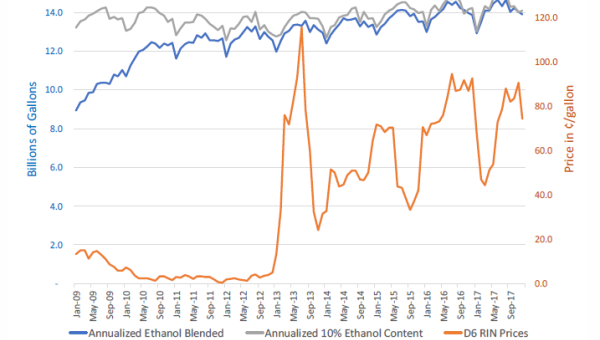
There is a fundamental flaw in the system designed to ensure compliance with the Renewable Fuel Standard (RFS): The assumption that refiners would not blend ethanol into their fuel were it not for the policy and its threat of crippling costs being imposed on obligated parties who do not blend.
As Hurricane Florence approaches the East Coast, Carolina communities are preparing for the Category 3 storm to make landfall – while nearly two million residents are under warning to evacuate.