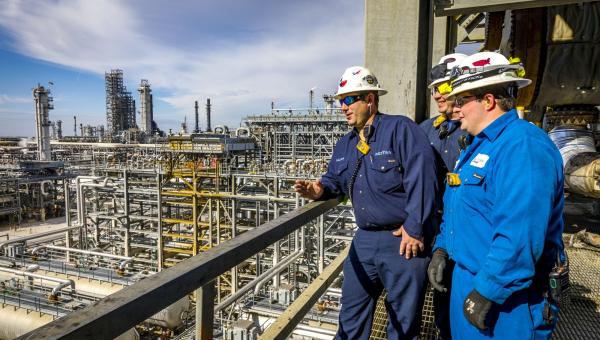
Governor Gavin Newsom continues to blame fuel refiners for California’s highest-in-the-nation fuel prices. He couldn't be more wrong. The problem and solution to much of California’s fuel price challenge can be found in Sacramento policy. Take a look to better understand the role of policy in regional price differences, why it’s inaccurate to equate “margins” or “refinery cracks” with “profits,” and why windfall profit taxes are a known policy failure.
Restricting exports would be a major unforced error for the President, tightening global fuel supplies, throttling U.S. fuel production and increasing costs for American consumers. Likewise, imposing product inventory requirements boils down to siphoning gasoline and diesel into storage, and away from consumers.
In a tight refined product market it has been U.S. refiners that have stepped up. Our industry ran full-out for most of 2022 making sure American consumers, our domestic economic centers and our allies had enough gasoline, diesel and jet fuel to keep everyone moving. Our refining sector leads the world in liquid fuel production and is effectively doing more than any other to bring better balance to the global market.
WASHINGTON, D.C. – Today, Chet Thompson, President and CEO of the American Fuel & Petrochemical Manufacturers, made the following statement regarding the Administration’s announcement of tariffs on products made in Mexico.
Pundits and politicians often frame energy technologies like solar generation and liquid fuels as competitors, not companions. But a visit to Flint Hills Resources’ Pine Bend refinery might change their minds.
WASHINGTON, D.C. — American Fuel & Petrochemical Manufacturers (AFPM) President and CEO Chet Thompson issued the following statement addressing the potential impact of tariffs levied on crude oil and refined products from Canada and Mexico.
WASHINGTON, D.C. — AFPM Senior Vice President of Government Relations & Policy, Geoff Moody, issued the following statement today on Utah’s announcement of an agreement around House Bill 575.
Rosemount, Minn. – The flame at the top of a 400-foot stack here at the Flint Hills Resources' Pine Bend refinery used to burn so brightly and so consistently that some say it was used to train pilots to land planes at the Minneapolis-St. Paul Airport.
If you read the headlines in the news lately — “Greenhouse Gas Emissions From Plastics Are Predicted to Rise,” “New Texas petrochemical projects add millions of tons of greenhouse gas pollution, report finds” — you’d think emissions from the petrochemical industry were getting worse.