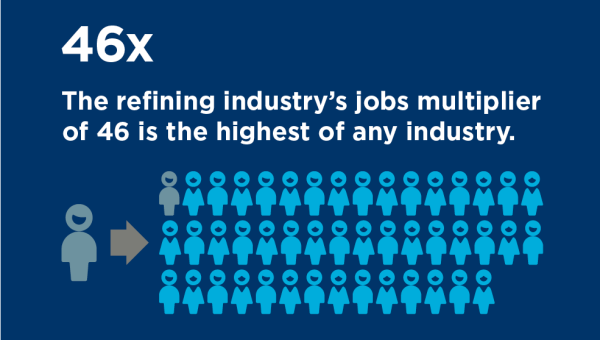
The U.S. refining industry has a widespread economic impact on our nation. It supports millions of American jobs and pumps billions of dollars into the economy, as documented by the new AFPM report Economic Contributions of U.S. Petroleum Refineries. Report highlights, based on the latest full year of data available through IMPLAN (2022), are featured in this blog.
As we enjoy watching our favorite Olympic events and proudly tally Team USA medals, we can’t help but spot petrochemicals and their supporting role in the Games as well — in our athletes’ high-performance uniforms and sporting equipment, in the flags, nets and world-class venues on display throughout Paris.
WASHINGTON, D.C. — American Fuel & Petrochemical Manufacturers (AFPM) President and CEO Chet Thompson issued the following statement today in response to reports indicating that the United States is shifting its position on the United Nations’ global agreement to end plastic pollution and will now support calls for plastic production caps and the establishment of a global list of banned chemicals. AFPM has been a participant in the United Nations’ (UN) Intergovernmental Negotiating Committee (INC) process for the past two years:
WASHINGTON, D.C. — American Fuel & Petrochemical Manufacturers (AFPM) President and CEO Chet Thompson issued the following statement on the final results of the 2024 general election.
WASHINGTON, D.C. — The American Fuel & Petrochemical Manufacturers (AFPM), in partnership with the Science History Institute and the Founders Club, is proud to announce that Bhavesh V. (Bob) Patel, retired CEO of LyondellBasell Industries, will receive the 2026 Petrochemical Heritage Award during AFPM’s International Petrochemical Conference on March 30.
Are you glued to the TV for the 2026 Winter Olympics in northern Italy? We absolutely are, and as we root for Team USA to win it all, we can’t help but notice how petrochemicals are essential to the Games.
Given low domestic recycling rates for plastic, the efficacy of recycling is often called into question. But that doesn’t mean recycling doesn’t work. Advanced recycling technologies — as well as traditional mechanical recycling — play a pivotal role in addressing plastic waste and recovering the value in used plastics.
Since TSCA directly affects a company’s ability to make, import, sell and use chemicals, it has implications for entire American supply chains and interstate commerce.