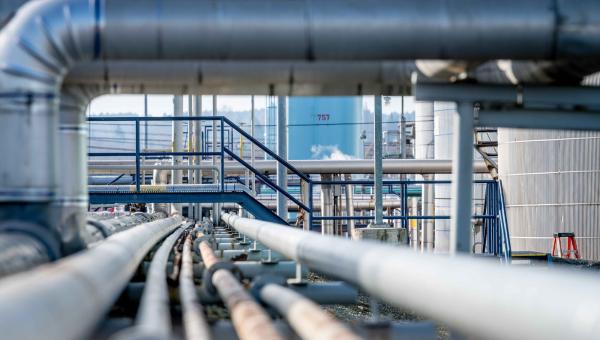
To address freight rail concerns, leaders from LyondellBasell and the Surface Transportation Board (STB) held discussions and toured LyondellBasell’s facility in Morris, Illinois. LyondellBasell’s Morris Complex is unique in that it is served by more than one major rail carrier. Nearly 80 percent of U.S. refineries and petrochemical facilities operate in regions served by just one freight rail provider.
The California Air Resources Board (CARB) adopted its Advanced Clean Cars II (ACCII) regulation. ACCII requires 35% of light-duty vehicle sales to qualify as “zero emission” by 2026 and 100% by 2035. Essentially, this amounts to a ban on new sales of traditional gasoline and diesel-powered cars and trucks. To implement the policy, California will need a Clean Air Act waiver from the Environmental Protection Agency (EPA). If EPA grants the waiver, millions of Americans—including many outside of California—could lose the option to buy the car or truck THEY want.
McKinsey released a new report outlining the emissions profiles of plastic vs. non-plastic alternatives in multiple use cases. They found that in nearly every case examined, plastics are responsible for less greenhouse gas emissions throughout their lifecycle than alternative materials.
The U.S. petrochemical industry has a crucial and enduring role to play in meeting the needs of a growing world population while simultaneously fulfilling the imperative to produce petrochemicals in a sustainable and clean manner.
AFPM opposes the Inflation Reduction Act as written. We evaluated the bill against our core principles, specifically whether the legislation would support strong U.S. refining and petrochemical industries and whether it pursued emissions reductions in a market-based and cost-effective manner. Unfortunately, the IRA falls short of these goals.
Thursday, August 18, AFPM President and CEO Chet Thompson sent a letter to House Transportation and Infrastructure Committee Chairman Peter DeFazio (D-OR) and Ranking Member Sam Graves (R-MO) making...