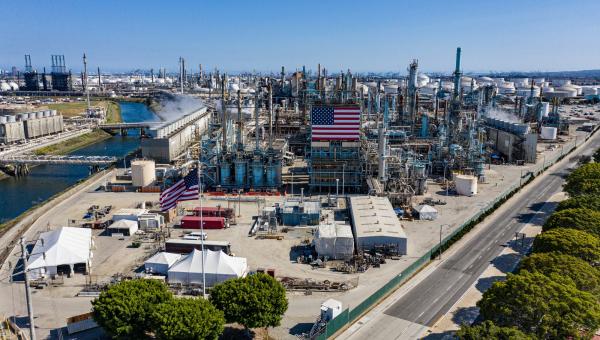
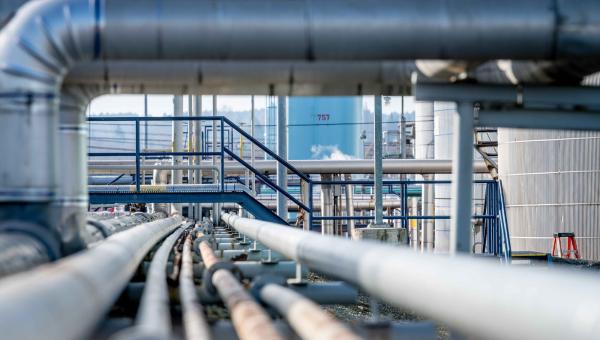
To address freight rail concerns, leaders from LyondellBasell and the Surface Transportation Board (STB) held discussions and toured LyondellBasell’s facility in Morris, Illinois. LyondellBasell’s Morris Complex is unique in that it is served by more than one major rail carrier. Nearly 80 percent of U.S. refineries and petrochemical facilities operate in regions served by just one freight rail provider.
We are surprised and disappointed by the President’s letter. Any suggestion that U.S. refiners are not doing our part to bring stability to the market is false. We would encourage the Administration to look inward to better understand the role their policies and hostile rhetoric have played in the current environment.
The return of fuel demand to pre-pandemic levels and the slower rebound of crude oil and fuel production has created concerns about whether supplies of gasoline, diesel and jet fuel will be sufficient to meet global demand. U.S. refineries are up and running at near maximum utilization. Other major refining countries, for a variety of reasons, have not kept pace bringing their facilities back into operation or resuming sales of fuel to the market. As a result, wholesale fuel prices have increased and so have refinery “crack spreads."
A Strategic Petroleum Reserve (SPR) release—which basically involves making additional barrels of crude oil available for sale to the world market—is meant to increase global supply. Meeting today’s demand with more supply is a recipe for lower prices. The United States released millions of barrels from our SPR in the past several months, as did many other countries.
McKinsey released a new report outlining the emissions profiles of plastic vs. non-plastic alternatives in multiple use cases. They found that in nearly every case examined, plastics are responsible for less greenhouse gas emissions throughout their lifecycle than alternative materials.
The U.S. petrochemical industry has a crucial and enduring role to play in meeting the needs of a growing world population while simultaneously fulfilling the imperative to produce petrochemicals in a sustainable and clean manner.
AFPM opposes the Inflation Reduction Act as written. We evaluated the bill against our core principles, specifically whether the legislation would support strong U.S. refining and petrochemical industries and whether it pursued emissions reductions in a market-based and cost-effective manner. Unfortunately, the IRA falls short of these goals.
Thursday, August 18, AFPM President and CEO Chet Thompson sent a letter to House Transportation and Infrastructure Committee Chairman Peter DeFazio (D-OR) and Ranking Member Sam Graves (R-MO) making...
AFPM director of transportation and infrastructure, Rob Benedict, discusses the potential impacts proposed steel tariffs would have on the fuels and petrochemical industries.